+86 18968869621


Why do global buyers increasingly select Led Panel Light for offices, schools, hospitals, retail spaces, and hospitality projects? The answer usually begins with practical performance, not appearance alone. A slim panel can distribute light across a wide ceiling area, reducing harsh shadows and creating a calmer working environment. When installed in a 600 × 600 millimeter ceiling grid, it can replace older fluorescent fixtures with a cleaner, more modern solution. Buyers also examine wattage, lumen output, color temperature, beam angle, glare control, and color rendering before approving a specification.
Real purchasing experience shows that efficiency is only one part of the decision. A reliable supplier should provide test reports, product datasheets, warranty terms, photometric files, and clear information about driver quality. Regional requirements matter too. Voltage, dimming protocols, emergency options, fire performance, and recognized safety certifications may differ between markets. Check everything carefully. A low purchase price can become expensive if panels flicker, discolor, or fail in difficult-to-reach ceilings. No product is perfect. Some panels may need compatible drivers, careful installation, or better heat management in hot climates. That detail is easy to overlook.
For international buyers, Led Panel Light offers a practical balance of energy use, visual comfort, installation flexibility, and long service potential. However, confident sourcing depends on evidence rather than attractive claims. Compare samples under real room conditions. Ask how performance was tested. Review after-sales support and replacement availability before placing a large order. This approach helps buyers choose lighting that performs reliably, meets local expectations, and remains sensible beyond the first quotation.
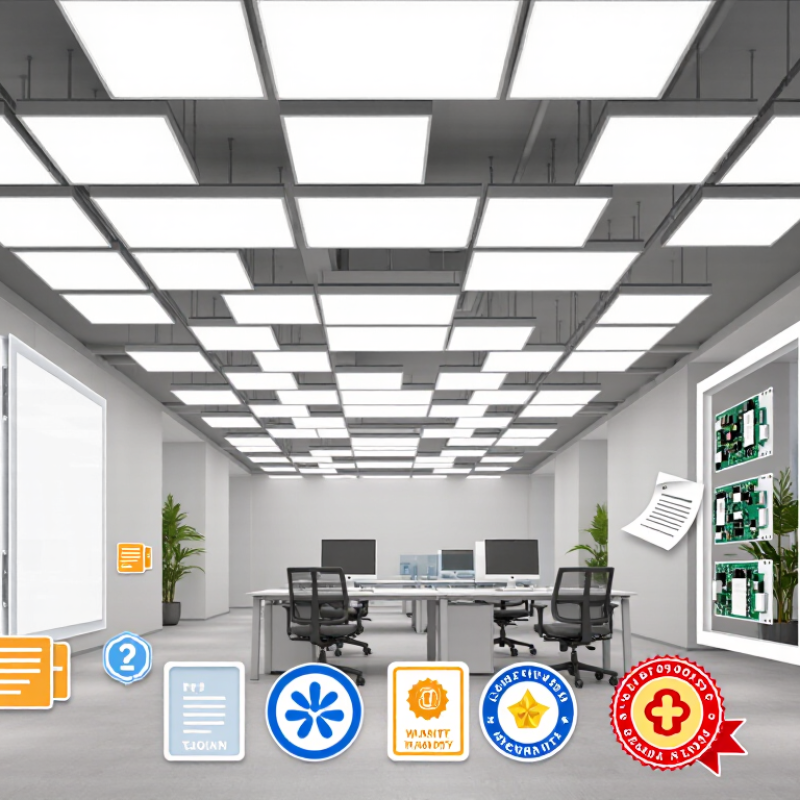
An LED panel light is a flat lighting fixture that uses light-emitting diodes, or LEDs, to produce illumination. Its main parts include an LED board, a driver, a diffuser, and a metal frame. The diffuser spreads light across a ceiling, reducing harsh points and shadows. In offices, classrooms, hospitals, and retail spaces, common panel sizes include 600 × 600 millimeters and 300 × 1200 millimeters.
The U.S. Department of Energy reports that commercial LED products can reach roughly 100–150 lumens per watt, although real performance depends on the driver, diffuser, temperature, and installation. The International Energy Agency has also reported that LEDs represented about half of global lighting sales in 2020. These figures explain their popularity, but they do not guarantee every panel performs well. A low-quality driver may create flicker, noise, or early failure. That part is easy to overlook.
From practical installation experience, buyers should check UGR, color rendering, power factor, surge protection, and the rated lifetime at a stated ambient temperature. A panel rated at 50,000 hours sounds impressive. Yet, its driver may not last that long. The Lighting Facts program and relevant photometric test reports can help verify lumen output and color consistency. Do not judge brightness from wattage alone. A 40-watt panel with poor optical efficiency may appear weaker than a carefully designed 30-watt model. Even published data needs context.
Why Choose LED Panel Light for Global Buyers?
An LED panel light converts electrical energy into visible light through semiconductor diodes. The driver changes incoming alternating current into stable direct current. This process helps control brightness and reduces unwanted flicker.
Inside the panel, small LEDs sit on a circuit board. In edge-lit designs, light travels through a clear guide plate. Tiny patterns spread it across the surface. A diffuser then softens the output, creating a broad, even glow. Direct-lit panels place LEDs behind the diffuser instead. They may require better spacing to prevent bright spots.
The frame usually contains aluminum for strength and heat control. Excess heat can shorten diode life, even when the panel feels only warm. I have seen installations fail early because airflow was blocked above the ceiling. That detail is easy to miss. A suitable driver, correct voltage, and secure wiring matter just as much as the panel itself.
In offices, classrooms, and retail spaces, panel lights can replace older fluorescent fixtures with less maintenance. However, energy savings depend on actual wattage, operating hours, and lighting controls. A high-efficiency label alone proves little. Buyers should check color temperature, color rendering, flicker performance, beam uniformity, and certification for the target market. Specifications can look impressive. Real room conditions may disagree. Testing one sample before large-scale installation remains a practical safeguard.
LED panel lights use a semiconductor LED chip to convert electrical energy directly into light. A driver regulates the current, while a light guide plate and diffuser distribute the light evenly across the panel. The representative system-level comparison below shows why LED panels are widely selected for commercial and residential lighting: they generally provide higher luminous efficacy and require less electricity to produce the same amount of light.
The figures are representative typical values for general lighting systems; actual performance varies by product design, operating conditions, and installation.
High-quality LED panels begin with measurable performance, not attractive packaging. Check efficacy, color rendering, and lifetime data before comparing prices. The U.S. Department of Energy reports that LED lighting can use at least 75% less energy than incandescent lighting. However, panel performance depends on the complete fixture, not the diode alone. Look for tested efficacy above 100 lumens per watt, stable 4000K or 5000K color temperature, and a CRI of 80 or higher. Offices, classrooms, and clinics often need lower glare. UGR values below 19 are commonly preferred for office environments.
Thermal design deserves close attention. Aluminum frames, reliable heat paths, and separated drivers can reduce premature aging. Ask for LM-80 and TM-21 evidence when lifetime claims exceed 50,000 hours. These documents estimate lumen maintenance under defined conditions. They do not guarantee every installation. That distinction matters. The U.S. DOE Energy Saver guidance also notes that LEDs can last up to 25 times longer than incandescent lamps, but heat, voltage quality, and switching patterns still affect service life.
Flicker is another practical test. Request percent flicker or Pst LM data, especially for cameras and sensitive workspaces. Check surge protection, driver efficiency, emergency compatibility, and documented safety certification. A long warranty sounds reassuring. It is not proof of quality. I would also inspect sample panels after continuous operation, because some weaknesses appear only after several hot weeks.
LED panel lights suit global markets because they meet common commercial lighting needs in many regions. Their slim profile fits offices, schools, hospitals, shops, and public buildings. Even ceilings with limited space can accommodate them. Light spreads evenly across a work area, reducing harsh shadows and uncomfortable glare when properly selected.
Energy efficiency is another practical advantage. Lower power use can support operating cost control, especially in buildings with long daily lighting schedules. LED panels also offer different color temperatures, dimming options, and ceiling installation methods. However, global buyers should check voltage range, product documentation, safety testing, and local installation requirements. Requirements differ between markets. A reliable supplier should provide clear technical data, test reports, and service support rather than vague promises.
Tips: Compare lumen output, not wattage alone. Confirm flicker performance for cameras and computer-based work. Request a sample before placing a large order. Check the driver’s warranty and replacement process. Small details matter.
LED panel lights are not perfect. Poor heat management can shorten service life, while an unsuitable diffuser may create glare or uneven brightness. I have seen projects focus on low purchase prices and overlook maintenance access. That decision often creates higher costs later. Buyers should consider ceiling structure, room use, climate, and local electrician experience before choosing a model. A careful evaluation makes the product more dependable across different global environments.
Why Choose LED Panel Light for Global Buyers?
LED panel lights suit offices, schools, clinics, and retail spaces because they provide broad, even illumination. However, choosing the right panel requires more than comparing wattage and price. In real purchasing work, I have seen inexpensive panels fail early because their drivers overheated or their light output dropped quickly. Check the claimed lumens, color temperature, beam distribution, and rated lifetime. Ask whether the lifetime reflects laboratory testing or actual operating conditions. The difference matters.
Before purchasing, request complete technical documents, including electrical specifications, photometric data, safety test reports, and installation instructions. Confirm compatibility with local voltage and frequency. Check flicker performance, glare rating, power factor, and color rendering. For offices, a low-glare design may improve comfort during long working hours. Also inspect the frame, diffuser, connectors, and driver access. A sample installation can reveal uneven light, visible shadows, or difficult mounting. Do not rely on photographs alone. They can hide small defects.
Tips: Compare samples under the same ceiling and camera settings. Ask about spare drivers, warranty terms, packaging strength, and replacement procedures. Verify whether reports match the exact model, not a similar product. Consider local recycling and electrical requirements before placing a large order. A longer warranty sounds reassuring, but unclear exclusions may weaken its value. I still find some specifications incomplete, so written confirmation is worth requesting.
| Buying Dimension | Typical Target or Specification | Why It Matters to Global Buyers | What to Check Before Purchasing |
|---|---|---|---|
| Energy Efficiency | 100–160 lm/W for many current commercial LED panel designs | Higher efficacy can reduce electricity consumption and operating costs compared with older fluorescent systems. | Check whether the stated efficacy is for the complete luminaire, not only the LED module. Request test data showing lumens, watts, and test conditions. |
| Rated Power | Common indoor panel ratings include 24 W, 36 W, 40 W, and 48 W | Power selection affects illumination, circuit loading, energy use, and replacement compatibility. | Compare rated input power with delivered light output. Confirm whether the driver power is included in the stated wattage. |
| Light Output | Often approximately 2,400–7,000 lumens, depending on size and power | Suitable light output supports workplace visibility and helps avoid installing too many or too few fixtures. | Review the photometric file, lumen output, beam distribution, and recommended mounting height for the intended space. |
| Color Rendering | CRI ≥80 for general commercial areas; CRI ≥90 where color accuracy is important | Good color rendering improves visual comfort and makes products, materials, and interior finishes appear more natural. | Verify the CRI value in the product datasheet. For retail, healthcare, design, or inspection areas, check whether higher CRI is required. |
| Color Temperature | Common options: 3000 K, 4000 K, and 5000–6500 K | Color temperature influences atmosphere, visual comfort, and suitability for offices, schools, retail spaces, and industrial areas. | Specify the required CCT before ordering. Confirm the tolerance range and whether the product is fixed-CCT or selectable-CCT. |
| Flicker Performance | Low-flicker or flicker-controlled driver | Reduced flicker can improve visual comfort and is especially relevant in offices, educational spaces, studios, and areas with cameras. | Ask for flicker percentage, flicker index, or modulation data at the intended operating condition rather than relying only on the word “flicker-free.” |
| Glare Control | UGR <19 is commonly specified for many office applications, subject to the lighting design | Lower glare supports comfortable screen-based work and reduces visual distraction. | Check the UGR value together with room dimensions, spacing, mounting height, reflectance, and the complete photometric file. UGR is not determined by the fixture alone. |
| Operating Life | Common claims include 50,000 hours under stated test conditions | Long service life can reduce maintenance, replacement labor, and access costs. | Look for L70 or equivalent lifetime information, ambient-temperature conditions, driver life, and whether the rating applies to the complete luminaire. |
| Thermal Management | Aluminum housing or heat-spreading structure with defined operating-temperature limits | Effective heat dissipation helps maintain light output, color stability, and component life. | Review the allowable ambient temperature, thermal test information, housing material, ventilation requirements, and installation orientation. |
| Input Voltage and Frequency | Typical global ranges include 100–277 V AC, 50/60 Hz; exact compatibility varies by model | Electrical compatibility is essential when products are supplied to different countries and power systems. | Confirm the actual input range, frequency, surge protection, inrush current, terminal type, and local electrical requirements. |
| Power Factor | PF ≥0.90 is a common commercial target; some projects require higher values | Higher power factor can reduce reactive current and support better electrical-system performance. | Check power factor at the rated load and across the intended voltage range. Do not assume the value is identical at every operating condition. |
| Electrical Safety | Appropriate insulation, grounding, short-circuit, over-voltage, and over-temperature protection | Safety features help reduce electrical risks and support reliable operation in commercial installations. | Request applicable safety test reports, wiring diagrams, protection details, and installation instructions for the destination market. |
| Ingress Protection | IP20 is common for dry indoor ceilings; higher IP ratings may be needed in humid or dusty locations | The required protection level depends on moisture, dust, cleaning methods, and the installation environment. | Match the IP rating to the site conditions. Confirm whether the rating applies to the complete installed luminaire and all cable-entry points. |
| Emergency and Dimming Options | Possible options include 0–10 V, DALI, TRIAC, sensor control, and emergency battery versions | Control and emergency functions can reduce energy use and help meet project-specific building requirements. | Confirm control-system compatibility, dimming range, standby power, emergency duration, battery type, testing method, and wiring requirements. |
| Dimensions and Installation | Common modular sizes include 600 × 600 mm and 600 × 1200 mm | Correct dimensions simplify replacement and ensure compatibility with existing ceiling grids or suspension systems. | Check exact external dimensions, cut-out size, thickness, mounting method, weight, connector position, and compatibility with the ceiling system. |
| Certifications and Market Compliance | Destination-market compliance documentation | Regulatory requirements differ by country and may affect customs clearance, installation approval, and project acceptance. | Verify the required safety, electromagnetic compatibility, environmental, and energy-efficiency documentation for the importing country. Check that documents match the exact model. |
| Warranty and Technical Support | Commercial LED panels commonly carry a 3–5 year warranty, depending on the supplier and project terms | A clear warranty reduces commercial risk and provides support for defects, early failures, and replacement procedures. | Review warranty duration, coverage, exclusions, claim process, shipping responsibility, spare-part policy, and response time for technical issues. |
| Quality Consistency | Stable color binning, consistent driver specifications, and controlled production testing | Consistent batches help prevent visible differences in brightness or color across large installations. | Ask for sample approval, batch-control procedures, inspection records, production test reports, and a written change-notification policy. |
| Total Cost of Ownership | Consider purchase price, energy use, maintenance, replacement frequency, controls, shipping, and installation | The lowest initial price does not always provide the lowest long-term cost. | Compare expected annual energy consumption, maintenance requirements, useful life, warranty risk, spare parts, and recycling or disposal obligations. |