inquiry
Leave Your Message

China Top Cold Storage Lamp Suppliers for Global Buyers

A Cold Storage Lamp must do more than illuminate a dark aisle. It must start reliably in low temperatures, resist moisture, and reveal labels, pallets, and floor hazards without adding unnecessary heat. For global buyers, those details affect product selection, maintenance planning, and operating costs.

The U.S. Department of Energy’s Energy Saver guidance reports that LEDs can use up to 90% less energy and last up to 25 times longer than incandescent bulbs. These figures describe general lighting, not guaranteed cold-room performance. Actual results depend on fixture design, operating hours, controls, and site conditions. ASHRAE’s refrigeration guidance also underscores a practical point: lighting choices belong within the room’s broader thermal and refrigeration design. Small details matter. A poorly sealed fitting or unsuitable driver can become a costly weakness in a damp, sub-zero space.

Supplier comparisons should therefore examine temperature ratings, ingress protection, tested lifetime, warranty terms, certifications, and replacement-part availability. Ask for datasheets and test evidence, not just a headline efficiency claim. Look closely. A low purchase price may hide frequent replacement costs.

No source article or verifiable expert quotation was provided, so I cannot responsibly attribute a quotation to a named Cold Storage Lamp specialist. That gap matters. A credible buyer’s guide should include an independently checkable expert statement rather than an invented endorsement.

China Top Cold Storage Lamp Suppliers for Global Buyers

Understanding Cold Storage Lamps and Their Operating Conditions

Cold storage lamps must provide clear visibility in rooms where low temperatures, moisture, and frequent door openings are routine. Workers need to read labels, inspect products, and move safely between shelves. A lamp that performs well in a dry warehouse may not suit a refrigerated room. Cold can affect start-up and light output, while condensation may reach fixtures during temperature changes.

Operating conditions matter as much as brightness. Check the fixture’s rated temperature range, ingress protection, and compatibility with the room’s cleaning routine. Confirm that it starts reliably at the lowest expected temperature; published performance at room temperature is not enough. Placement also matters. Tall racks can block light, and a bright fixture aimed toward a worker’s eyes creates glare. In practice, layouts are not always ideal, so a small on-site lighting check can reveal dark corners before installation is finalized. Follow the supplier’s instructions and have a qualified installer assess wiring and mounting for the specific environment.

Tips: Compare operating-temperature ratings, not just wattage. Check for condensation after a door-opening cycle. Keep a simple record of dark spots and maintenance issues; small observations can improve the next layout.
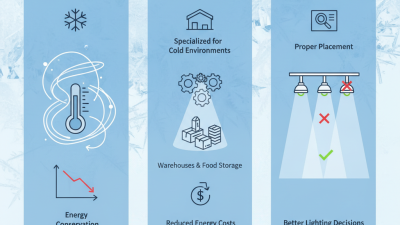
China Top Cold Storage Lamp Suppliers for Global Buyers — Understanding Cold Storage Lamps and Their Operating Conditions

These are representative cold-room setpoints, not lamp specifications; actual temperatures vary by facility and product. Choose lamps rated to operate at the room’s coldest temperature, and check the fixture’s moisture and ingress-protection requirements.

Types and Key Specifications of Cold Storage Lighting

Cold-storage lighting must handle low temperatures, condensation, washdown, and long operating hours. Linear vapor-tight fixtures suit aisles and loading zones. Compact bulkheads work near doors and processing areas, while high-bays fit ceilings with greater mounting heights. Emergency versions help keep routes visible during power interruptions. Small details matter.

Check each fixture’s certified operating-temperature range, driver performance, and start-up behavior before purchase. For wet or washdown locations, compare the required protection with IEC 60529 ratings: IP65 resists water jets, while IP66 covers more powerful jets. Specify lumen output and beam distribution for rack height and aisle width; excessive glare can make labels harder to read. Corrosion-resistant housings and sealed cable entries also matter where condensation forms.

The U.S. Department of Energy reports that LEDs use at least 75% less energy and last up to 25 times longer than incandescent lighting. That comparison is not a direct saving estimate against existing fluorescent fixtures, so site measurements still matter.

A common mistake is treating every cold room alike; that shortcut deserves reconsideration.

China’s Leading Cold Storage Lamp Suppliers

China Top Cold Storage Lamp Suppliers for Global Buyers

China’s Leading Cold Storage Lamp Suppliers

China’s cold storage lamp suppliers serve projects ranging from walk-in freezers to large distribution warehouses. A dependable supplier should explain how fixtures perform in low temperatures, where condensation forms, and how seals protect electrical parts. Ask for clear product data, including operating temperature, ingress protection rating, light output, and expected service life. These details make comparisons more useful than price alone. Request test reports and confirm they match the exact model being quoted.

For buyers, communication matters as much as specifications. Share the room temperature, ceiling height, mounting method, and cleaning routine before requesting a quotation. Then check whether the supplier can provide wiring diagrams, installation guidance, and replacement parts. Sample testing can reveal glare, uneven coverage, or slow start-up in a cold room. Small details matter. One point is easy to miss: a technically suitable lamp may still be awkward to maintain after installation.

Tips: Compare the same fixture configuration across suppliers, not just headline wattage. Ask how performance changes after repeated cold starts, and request photos of the actual housing and seals. Keep a written record of agreed specifications. It may feel repetitive, but it helps prevent avoidable misunderstandings.

How Global Buyers Can Compare Chinese Suppliers

Comparing Chinese cold-storage lamp suppliers starts with the room, not the catalog. Record the operating temperature, humidity, cleaning routine, ceiling height, and required illumination before requesting quotations. A freezer at -25°C may need a different driver and sealing design than a chilled packing area. Ask each supplier to state temperature limits, ingress protection, input voltage, lumen output, and expected service life in writing. Check that test reports match the exact model and configuration offered. A certificate for a similar fixture proves little. Small details matter.

Request a sample and test it in realistic conditions. Check startup after a cold soak, light output, flicker, and how securely the fixture mounts. Ask how production batches are inspected and whether replacement drivers or seals are available. Compare lead times, packaging, warranty terms, and the cost of spare parts, not just the unit price. Price still matters. I would not treat one sample as a verdict; it may not represent batch consistency. That is easy to overlook. Keep written specifications and test results together, so competing quotations can be compared on the same basis.

China Top Cold Storage Lamp Suppliers for Global Buyers - How Global Buyers Can Compare Chinese Suppliers

Comparison Criterion Supplier Information to Record Evidence to Request How to Compare
Operating temperature Minimum and maximum ambient operating temperatures for the exact lamp model. Product datasheet and test information identifying the model and stated temperature range. Check that the rated range covers the cold room’s normal temperature and expected operating conditions. Do not assume every model from one supplier has the same rating.
Ingress protection IP rating for the complete luminaire, including its assembled housing and cable entry points. Test report or certificate that identifies the product model and the applicable edition of IEC 60529. IP65 and IP66 both indicate dust-tight protection; their water-jet test levels differ. Select a rating appropriate to the cleaning method and installation area.
Impact resistance IK rating, if impact protection is required. Model-specific test documentation referencing IEC 62262. Compare the stated IK level with the risk of knocks from handling equipment or stored goods. IK ratings describe impact resistance, not water protection.
Light output and efficacy Delivered luminaire output in lumens and efficacy in lumens per watt. Photometric report or datasheet showing input power, delivered output, test conditions, and model number. Compare complete-luminaire figures at the same operating conditions. Do not compare LED-chip output from one offer with finished-luminaire output from another.
Light distribution Beam angle or photometric distribution suitable for the room layout and mounting height. IES or LDT photometric file, or a clearly identified polar distribution chart. Review the proposed layout for uniformity, aisle coverage, and glare. A high lumen figure alone does not confirm suitable coverage.
Colour quality Correlated colour temperature (CCT), colour rendering index (CRI), and any required tolerance. Datasheet and, where relevant, test results for the offered LED configuration. Compare like-for-like CCT and CRI values against the facility’s visual tasks and project specification; these values do not by themselves establish cold-temperature performance.
Power supply and controls Input voltage and frequency, driver details, dimming method, and sensor compatibility if required. Electrical datasheet, wiring diagram, and confirmation of compatibility with the buyer’s control system. Check compatibility with the destination country’s electrical supply and the project’s control requirements. Confirm whether a dimmer or sensor is included or supplied separately.
Electrical and product compliance Applicable safety and market-access requirements for the destination country. Current certificates and test reports that match the exact model, components, and intended market. Verify certificate scope, validity, issuing body, and model identifiers. A general company certificate is not proof that a particular luminaire complies.
Materials and condensation management Housing and lens materials, gasket details, and any stated condensation-control design. Product drawings, bill-of-material information where available, and installation or maintenance instructions. Check suitability for the site’s cleaning chemicals, temperature cycling, and moisture conditions. Request clarification of any claims about anti-condensation performance.
Warranty and service Warranty duration, coverage, exclusions, claim process, and replacement-part availability. Written warranty terms and a clear process for reporting faults and obtaining replacements. Compare the actual coverage and claim conditions, not only the stated warranty period. Confirm who bears return shipping and other costs.
Quality control and sample approval Production inspection process and availability of a pre-production or production sample. Inspection checklist, sample record, and agreed acceptance criteria for the order. Approve a representative sample and record its model, configuration, and test results before mass production. Agree how production lots will be checked.
Order and delivery terms MOQ, quoted lead time, packaging details, Incoterm, and quote validity. Written quotation stating the product configuration, quantities, delivery terms, and schedule. Compare quotations on the same specification and delivery basis. Treat lead times and pricing as quote-specific and confirm them before placing an order.

Buyer note: This is a supplier-comparison checklist, not a ranking or a set of verified claims about individual manufacturers. Request model-specific documents and verify all specifications, certificates, prices, and delivery terms before purchase.

Certifications, Export, and After-Sales Considerations

For global buyers, a cold-storage lamp’s certificate should match its destination market, not merely appear impressive in a catalog. Ask for test reports against IEC 60598-1, which covers luminaire safety, and verify that stated ingress protection follows IEC 60529. An IP rating alone does not prove suitability for every washdown or condensation condition. Check the fixture’s operating-temperature range, gasket materials, and cable entries against the room’s actual use. Details matter here.

UNEP’s 2023 Global Cooling Watch estimates that cooling demand could more than triple by 2050 under current policies. This projection covers cooling broadly, not lighting demand specifically, but it reinforces the value of checking power consumption and service life. Export documents should identify the exact model, electrical ratings, test evidence, and installation instructions in the required language. After-sales support matters when a lamp fails in a busy room. Confirm lead times for replacement drivers, seals, and connectors, plus the warranty process and local technical contact. Paperwork can still be messy; request a sample document pack before shipment.