10 Essential Tips for Choosing the Right Led High Bay Light for Your Space?
In the evolving landscape of industrial lighting, selecting the right Led High Bay Light can feel overwhelming. According to lighting industry expert John Smith, “Choosing the right LED high bay light is crucial for both efficiency and safety.” With numerous options available, it is essential to navigate through this complexity to find the perfect fit for your space.
Quality lighting enhances productivity and safety in work environments. A well-chosen Led High Bay Light can dramatically improve visibility and energy efficiency. However, many buyers overlook key factors during their selection process, such as lumens output and color temperature. Balancing these elements requires careful consideration and expertise.
Understanding your space's unique needs is vital. Are you working in a warehouse, garage, or gym? Each setting has distinct lighting requirements. Consider height, layout, and activities performed in the area. Make informed choices based on reliable data and industry recommendations. Reflecting on these aspects will ensure you select an excellent Led High Bay Light that meets your requirements efficiently.
Understanding the Different Types of LED High Bay Lights Available
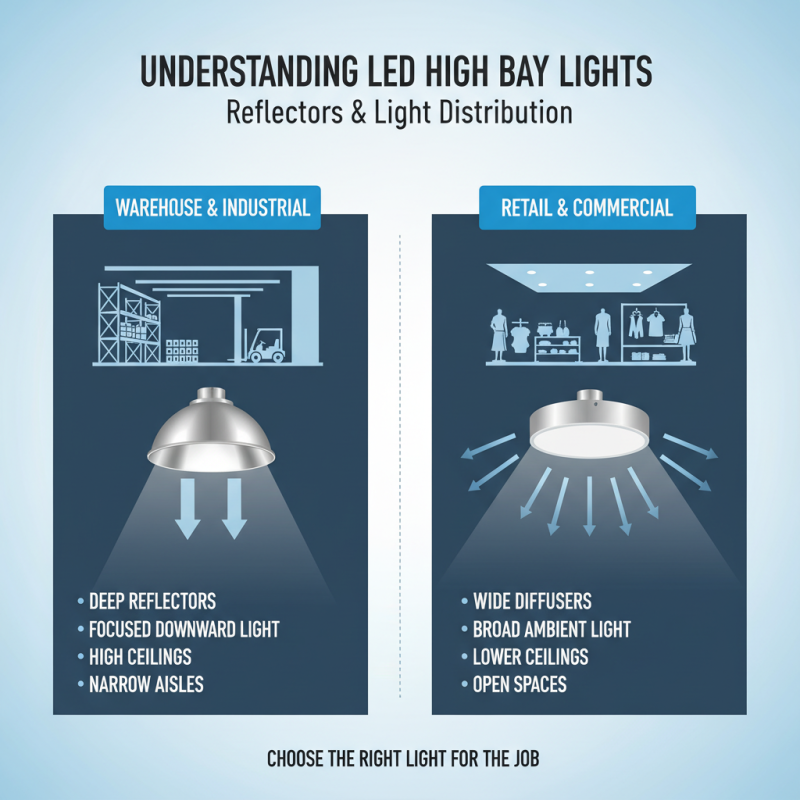
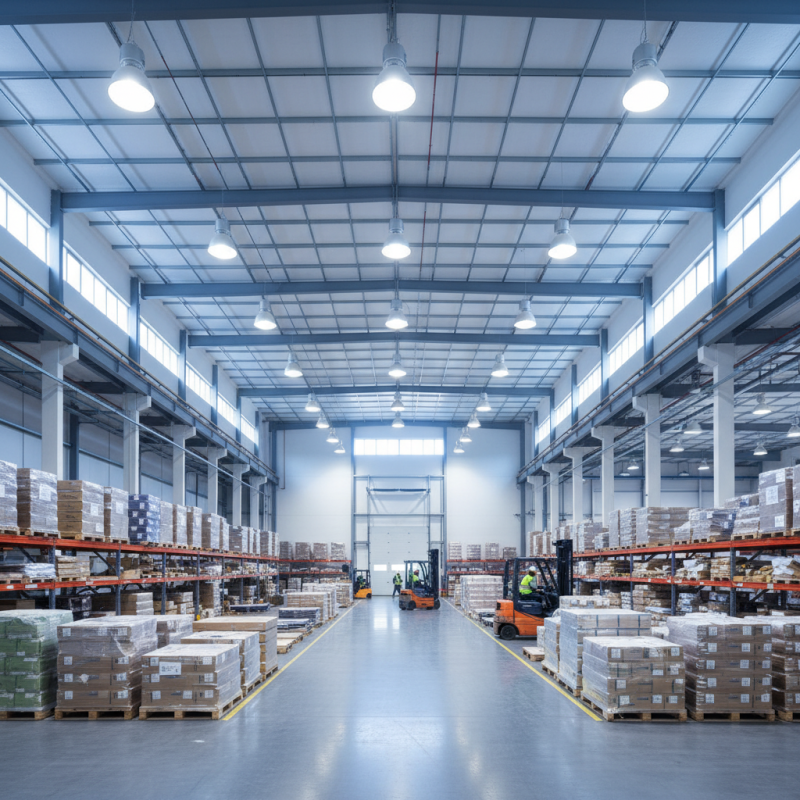
When selecting LED high bay lights, it's essential to understand the various types available. Different spaces require different lighting solutions. For instance, reflectors play a significant role in how light is distributed. Some designs focus light directly downwards, making them ideal for warehouses. Others spread light more broadly, perfect for retail environments.
There are two primary types of LED high bay lights: linear and round. Linear options are often preferred for longer areas. They provide consistent illumination along aisles or work areas. Round fixtures, however, are efficient for larger open spaces. They can illuminate wider areas effectively, reducing shadows.
One aspect to consider is the color temperature of the lights. Warmer tones tend to create a comfortable atmosphere and are suitable for spaces where people relax. Cooler tones are great for work environments, enhancing focus and productivity. However, opting for the wrong color temperature can lead to an unwelcoming space. Choose with care, as lighting impacts mood and performance.
Evaluating the Necessary Brightness and Lumens for Your Space
When selecting LED high bay lights, understanding brightness and lumens is crucial for your space. Lumens measure the amount of light emitted by a bulb. For instance, a warehouse or gym typically requires higher lumens than a retail store or office. A good rule of thumb is to aim for about 100-150 lumens per square foot in high-traffic areas. This ensures adequate visibility without excessive glare.
Evaluating the necessary brightness involves considering the tasks performed in the space. Areas with intricate assembly work may need more illumination compared to general storage. Overlighting can lead to discomfort, while under-lighting could compromise safety. Ask yourself, how is the space used? What activities occur there? Reflecting on these questions helps in determining optimal brightness.
In addition, consider the height of your ceilings. Higher ceilings necessitate lights with greater lumen output to ensure effective illumination reaches the floor. The placement of lights also affects brightness perception. Spacing lights properly will minimize dark spots, creating a balanced light distribution. Each space is unique, and finding the right balance might require some trial and error.
10 Essential Tips for Choosing the Right LED High Bay Light for Your Space
| Tip |
Description |
Recommended Lumens (per sq. ft.) |
Ideal Height for Installation |
Purpose/Area |
| 1. Assess Your Space |
Evaluate the dimensions and layout of the area to determine the number of fixtures needed. |
20-50 |
10-15 ft |
Warehouses |
| 2. Calculate Required Lumens |
Use the lumen output needed for your specific tasks in the space. |
30-70 |
15-25 ft |
Manufacturing |
| 3. Choose the Right Color Temperature |
Consider color temperatures like 4000K for a neutral white light, enhancing visibility. |
20-40 |
8-12 ft |
Retail |
| 4. Factor in Ceiling Height |
Higher ceilings require more lumens to maintain brightness. |
40-80 |
20-30 ft |
Gymnasiums |
| 5. Energy Efficiency |
Opt for high-efficiency LEDs to reduce electricity bills. |
20-60 |
15-20 ft |
Storage Facilities |
| 6. Durability and Design |
Select fixtures designed for high-bay applications for better longevity. |
Variable |
10-20 ft |
Specialty Areas |
| 7. Consider Beam Angle |
Wider beam angles cover larger areas while narrow angles focus light more intensely. |
15-50 |
Variable |
Open Spaces |
| 8. Lighting Controls |
Incorporate dimmers or occupancy sensors for better energy management. |
10-30 |
10-15 ft |
Offices |
| 9. Warranty and Support |
Check the warranty term as it reflects product quality and manufacturer confidence. |
Variable |
Depends on installation height |
Various |
| 10. Cost Consideration |
Balance initial costs with long-term energy savings for an economical decision. |
Variable |
Variable |
All Lighting Applications |
Identifying the Appropriate Wattage for Energy Efficiency
When choosing LED high bay lights, wattage is crucial. It determines how much energy the light will consume. Too high a wattage can lead to unnecessary energy costs. On the flip side, selecting too low a wattage can result in inadequate lighting. Aim for a balance that meets your space's needs.
For example, a warehouse requires brighter lights than a retail area. Analyzing the height of your ceilings helps clarify wattage needs. Typically, lights for ceilings above 20 feet should be at least 150 watts. This ensures proper illumination for safety and productivity.
Consider your usage patterns. If the lights are on for long periods, energy efficiency becomes paramount. Often, a higher initial investment in quality lights pays off over time. Look at the lumen output in relation to wattage. Aim for lights that provide maximum lumens per watt. This allows for better visibility without bloating your energy bills. There’s always room for improvement, so revisiting these factors can lead to better choices.
Considering the Color Temperature for Desired Ambiance
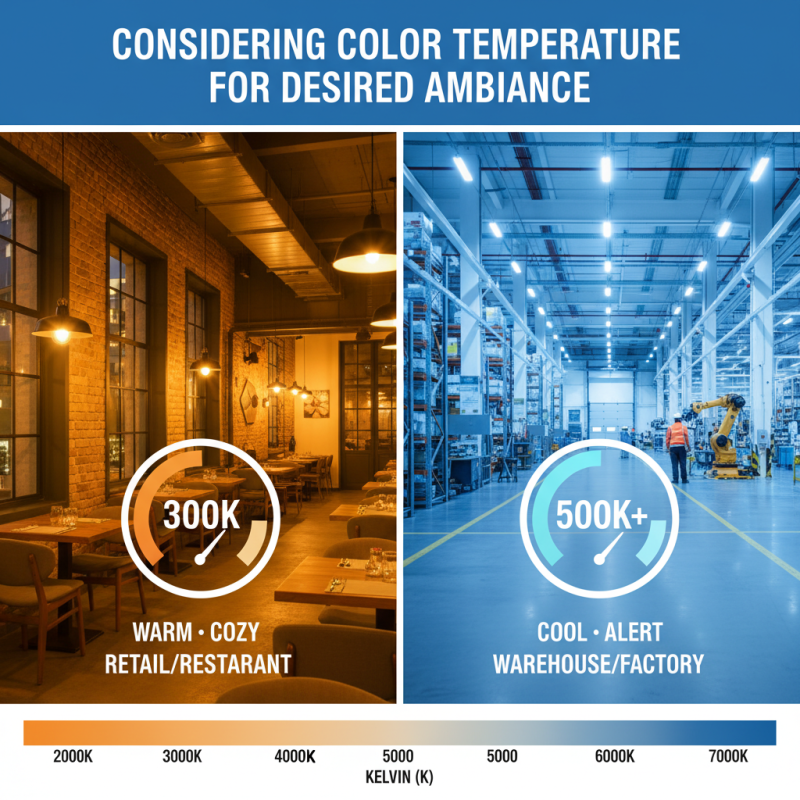
When selecting LED high bay lights, achieving the right color temperature is crucial to creating the desired ambiance. A color temperature measured in Kelvins (K) significantly impacts how a space feels. For example, a warmer color temperature of around 3000K creates a cozy atmosphere, ideal for retail shops or restaurants. In contrast, a cooler temperature of 5000K or more delivers a brighter, more alert environment suitable for warehouses or factories.
Tips for choosing the right color temperature: Assess the tasks performed in your space. For creative work, softer lights improve focus and reduce eye strain. For areas requiring alertness, opt for cooler temperatures. Notably, studies show that different color temperatures can influence mood. Cooler lights generally enhance productivity and concentration.
Consider labeling your options with different lighting samples. This can help visualize how each temperature affects the area's aesthetics. Remember, high bay lighting isn't one-size-fits-all. Reflection on how a space is used will guide the decision. Establish a balance between functionality and ambiance for optimal results. Your selections should align with both the operational needs and the intended emotional response of the space.
Assessing Mounting Height and Spacing for Optimal Light Distribution
When selecting the right LED high bay light, mounting height and spacing are crucial factors. The height at which the lights are installed significantly impacts illumination. Generally, the higher the light is mounted, the greater the area it covers. However, this can lead to uneven light distribution if not calculated correctly.
For optimal light distribution, consider the space's dimensions. A common rule is to mount lights at least 1.5 times the height of the fixture above the floor. This allows the light to spread evenly across the area. Also, spacing between fixtures should be no more than three times the mounting height. For example, if lights are 15 feet high, they should be spaced no more than 45 feet apart.
Evaluate the specific needs of your space. If it’s a warehouse, brighter, evenly distributed light is essential for safety. Too much spacing may create dark spots, which can lead to accidents. Remember, practical trials and adjustments may be necessary to achieve the best results. Always keep in mind the balance between coverage and intensity.
Optimal Light Distribution Based on Mounting Height and Spacing

 +86 18968869621
 CONTACT NUMBER