How to Choose the Right LED Tube for Your Business
Choosing the right Led Tube can affect energy costs, maintenance schedules, workplace comfort, and customer perception. A warehouse aisle, a supermarket shelf, and a small office need different lighting solutions. Brightness alone does not provide a reliable answer.
LED lighting engineer Michael Poplawski offers a useful principle: “The best retrofit begins with the space, not the lamp.” That idea deserves attention. Measure the existing fixture, ceiling height, operating hours, and required light level before comparing products. Check lumen output, color temperature, beam angle, power factor, warranty terms, and compatibility with existing ballasts. A tube that fits physically may still create electrical or performance problems.
Look beyond the box.
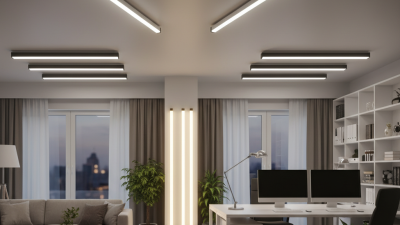
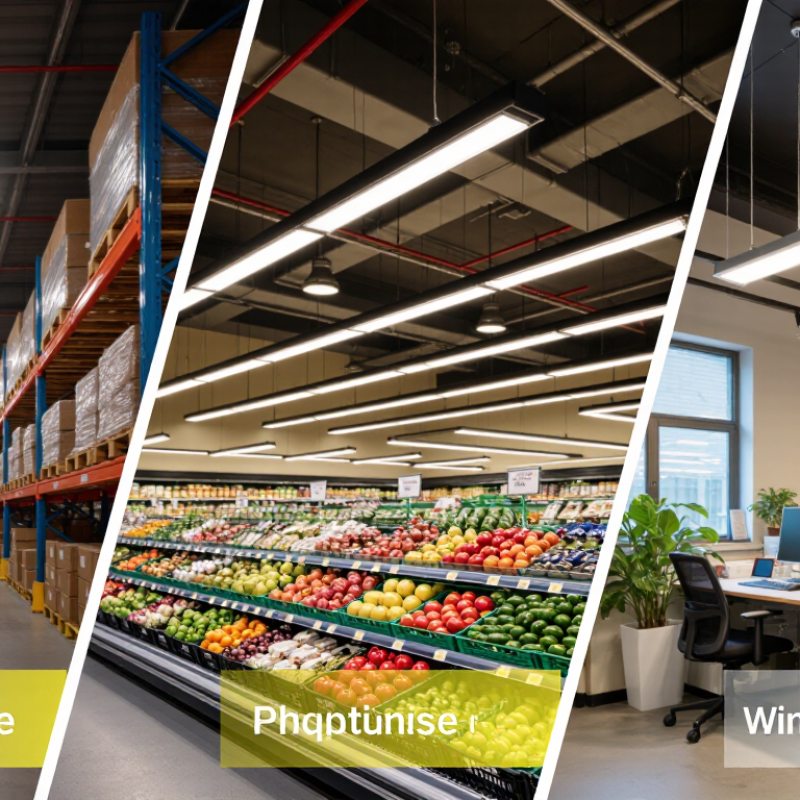
For busy businesses, installation time matters. A shatter-resistant Led Tube may suit food preparation areas, while a high-output model may work better in a tall warehouse. Offices often need lower glare and a neutral color temperature, commonly around 4000K. In retail spaces, color rendering can influence how products appear under the lights.
There is no perfect tube for every site. That is easy to forget. Some buyers focus heavily on wattage and overlook flicker, disposal requirements, or future maintenance. I would also question optimistic payback claims without reviewing local electricity prices and actual operating hours. A responsible choice combines measured performance, certified safety, dependable suppliers, and realistic business needs. The right Led Tube should quietly support the work, not become another problem for staff to manage.
Understanding LED Tube Types and Their Applications
How to Choose the Right LED Tube for Your Business
Understanding LED tube types prevents costly lighting mistakes. The right tube depends on the existing fixture, ballast, ceiling height, and work activity. T8 tubes suit many offices and retail spaces because they offer common dimensions and balanced brightness. T5 tubes fit compact fixtures. T12 replacements need extra care, since older magnetic ballasts may require removal.
Type A tubes operate with compatible ballasts. Installation is quick, but ballast failure remains a future cost. Type B tubes bypass the ballast and connect directly to line voltage. They can reduce maintenance points, though rewiring requires qualified personnel. Type C tubes use an external driver, providing better control and dimming options. They often suit warehouses, production areas, and smart lighting systems.
Type A tubes operate with compatible ballasts. Installation is quick, but ballast failure remains a future cost.
Type B tubes bypass the ballast and connect directly to line voltage. They can reduce maintenance points, though rewiring requires qualified personnel.
Type C tubes use an external driver, providing better control and dimming options. They often suit warehouses, production areas, and smart lighting systems.
Look beyond wattage. Check lumens, color temperature, color rendering, beam angle, and operating temperature. A 4,000K tube can make an office feel alert without looking harsh. For a supermarket, high color rendering matters near fresh food displays.
The U.S. Department of Energy reports that LED lighting can use at least 75% less energy than incandescent lighting and last much longer. However, that comparison does not guarantee savings against every fluorescent system.
The International Energy Agency estimates lighting uses about 15% of global electricity. That figure makes efficiency important, but poor compatibility can erase expected benefits.
Measure the space first. Sometimes the “brightest” tube is simply uncomfortable.
Checking Compatibility with Existing Fixtures and Ballasts
Choosing an LED tube starts with the fixture already hanging above your workspace. Check its length, socket type, wiring, and ballast before ordering replacements. A tube may fit physically but still fail electrically.
I once assumed every fluorescent fixture could accept a ballast-compatible LED tube. That mistake caused flickering and delayed installation. Read the tube’s technical sheet carefully. It should state whether the tube works with instant-start, rapid-start, or programmed-start ballasts. Confirm the ballast model and age as well. Older ballasts may create noise, weak output, or early failure.
Some LED tubes require ballast bypass wiring. This changes the fixture’s electrical configuration and should be handled by a qualified electrician. Never rely on appearance alone. Turn off power, verify the circuit is de-energized, and inspect the lamp holders for cracks or heat marks. Local electrical requirements may also affect the permitted installation method.
A simple compatibility test helps. Install one tube in a representative fixture, then check startup, brightness, flicker, and temperature after several hours. Watch the ends closely. If they remain unusually hot, stop testing. I have found that a small mismatch can become expensive across an entire facility. Keep records of fixture types, ballast details, and test results before ordering in bulk. Mistakes are easier to correct on one ceiling than on fifty.
Comparing Energy Efficiency, Lifespan, and Maintenance Needs
Choosing an LED tube starts with energy efficiency, but watts alone can mislead. Compare delivered lumens, color quality, and compatibility with existing ballasts. The U.S. Department of Energy reported LED efficacy near 140 lumens per watt in 2018, with further improvement expected in its solid-state lighting analysis. A 15-watt tube producing 2,000 lumens may outperform a higher-wattage replacement with weaker output.
Lifespan affects labor as much as electricity costs. DOE guidance commonly places quality LED products around 25,000 to 50,000 hours, while fluorescent tubes often provide fewer operating hours. At 4,000 annual hours, a 50,000-hour tube could operate for over twelve years. Real conditions matter. Heat, dust, frequent switching, and poor ventilation can shorten that figure. Not zero maintenance.
Maintenance needs deserve a physical inspection. Check socket condition, wiring, ballast type, ceiling height, and access equipment before ordering hundreds of tubes. The DesignLights Consortium evaluates commercial lighting products through performance requirements and qualified-product testing, giving buyers a stronger comparison point than packaging claims alone. Still, certification does not repair an unsuitable installation.
The arithmetic is persuasive, but imperfect. A direct-wire tube may reduce ballast losses, yet it can require rewiring and qualified electrical work. A ballast-compatible model may install faster, but future ballast failure remains a concern. Keep records of wattage, lumen output, installation dates, and failed units. That small log often reveals whether the promised savings appear in daily operation.
How to Choose the Right LED Tube for Your Business - Comparing Energy Efficiency, Lifespan, and Maintenance Needs
| Tube Type |
Typical Power for 1.2 m / 4 ft Tube |
Typical Light Output |
Approx. Efficacy |
Rated Life |
Maintenance Needs |
Best Use Case |
LED Type A
Ballast-compatible tube |
15–20 W |
1,800–2,400 lm |
100–130 lm/W |
40,000–60,000 hours |
Low; existing ballast may eventually require replacement. |
Quick upgrades where rewiring is undesirable. |
LED Type B
Direct-wire or ballast-bypass tube |
12–18 W |
1,800–2,400 lm |
110–150 lm/W |
50,000–100,000 hours |
Very low; fewer components remain in the circuit. |
Large facilities seeking lower long-term energy and service costs. |
LED Type A+B
Dual-mode tube |
14–19 W |
1,800–2,400 lm |
105–140 lm/W |
40,000–75,000 hours |
Low; offers installation flexibility but requires compatibility checks. |
Mixed facilities with different fixture and wiring conditions. |
LED Type C
External-driver tube |
12–18 W |
1,800–2,500 lm |
110–150 lm/W |
50,000–100,000 hours |
Low; driver access can simplify future servicing. |
New installations or projects requiring advanced controls. |
Fluorescent Reference
Conventional 4 ft lamp with ballast |
32–40 W, including ballast losses |
2,500–3,100 lm |
60–85 lm/W |
15,000–30,000 hours |
High; lamps and ballasts need more frequent replacement. |
Existing installations awaiting a planned LED conversion. |
Selection notes: Actual performance depends on tube length, color temperature, operating temperature, fixture design, ballast compatibility, and rated-life testing conditions. Compare delivered lumens, lumens per watt, power factor, warranty terms, and installation requirements before purchasing. LED rated life generally describes expected operating time until light output falls to a specified level, not a guarantee that every tube will operate for that entire period.
Evaluating Safety Standards, Installation Requirements, and Total Cost
Choosing an LED tube begins with safety, not wattage. Check IEC 60598-1 or equivalent local safety requirements. For North American projects, confirm the fixture’s certification and wiring method. A tube designed for ballast operation cannot automatically replace a ballast-bypass model.
Installation details matter. Record the existing ballast, socket type, voltage, and circuit condition before ordering. A qualified electrician should isolate power and verify connections. The U.S. Department of Energy reports that LED lighting can use at least 75% less energy than incandescent lighting and last up to 25 times longer. However, those figures do not guarantee equal savings in every tube conversion. Poor wiring, excessive heat, or an aging ballast can reduce performance. I have seen simple replacements become expensive after hidden electrical work appeared.
Calculate total cost over the fixture’s working life. Include tube prices, labor, ballast removal, disposal, electricity, maintenance, and possible rebates. The International Energy Agency’s Energy Efficiency 2023 report identifies lighting as roughly 15% of global electricity use, so small efficiency gains can scale across a facility. Compare annual kilowatt-hours, not only purchase prices. A lower-priced tube may need more frequent replacement. That is easy to overlook. Also question optimistic lifetime claims. Dust, switching frequency, ambient temperature, and operating hours can change results. Use documented photometric data and a written warranty, then test a small area before changing every fixture.

 +86 18968869621