inquiry
Leave Your Message

Best Waterproof Downlight Manufacturers in China?

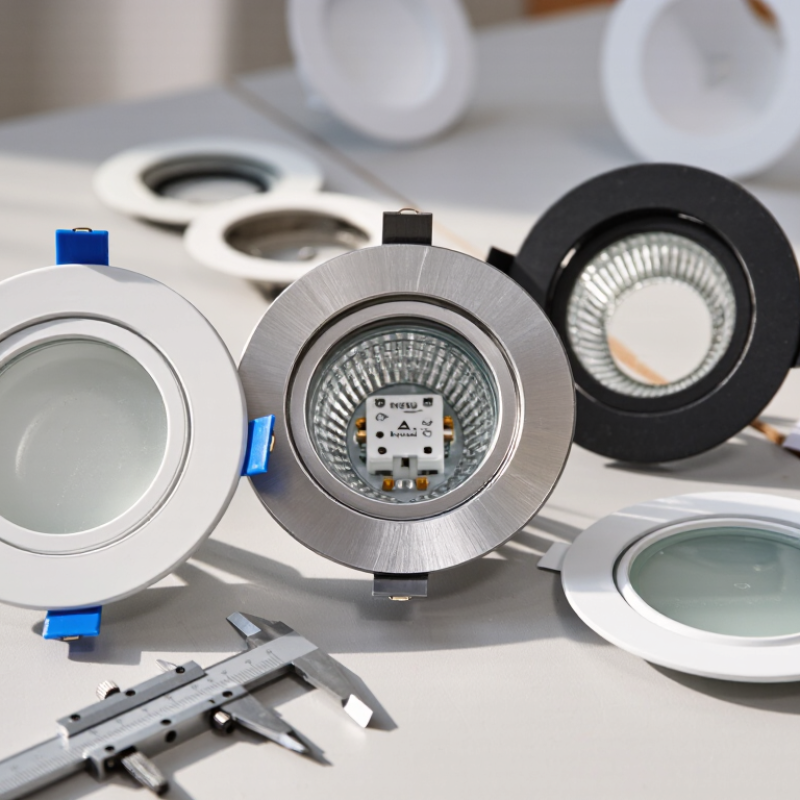
Choosing a Waterproof Downlight manufacturer in China involves more than comparing prices and product photos. A fitting may look solid online, yet its seal, driver, or finish can tell a different story after installation. Details matter. This guide introduces manufacturers and explains practical checks buyers can make before requesting samples or quotations.

Product specifications deserve close attention. Confirm the stated ingress protection rating, installation conditions, housing material, gasket design, and driver details. Ask how products are tested and whether supporting reports match the exact model you plan to purchase. A rating alone does not explain performance in every ceiling, bathroom, or outdoor setting. It is also worth reviewing beam angle, color temperature, dimming options, and cut-out dimensions. Small differences can cause delays on site.

Supplier evaluation matters just as much. Look for clear technical documentation, consistent communication, traceable quality-control steps, and realistic production schedules. Request sample units when possible, and compare their construction with the final quotation and datasheet. Ask about customization, packaging, warranty terms, and service after delivery. Not every manufacturer presents information equally well; that does not automatically mean poor quality, but it does call for more questions. This overview will help readers compare China-based suppliers with care, while recognizing that product claims should be verified for the intended project and market. A careful shortlist is useful. It is not a substitute for inspection.
Best Waterproof Downlight Manufacturers in China?

Waterproof Downlight Basics: IP Ratings Under IEC 60529

Waterproof Downlight Basics: IP Ratings Under IEC 60529

A downlight’s IP rating describes protection offered by its enclosure, not an unlimited promise of waterproofing. IEC 60529, Degrees of protection provided by enclosures, defines the code’s two digits: the first covers access and solid particles; the second covers water. For example, IP44 resists objects 1 millimetre or larger and splashing water. IP65 is dust-tight and tested against water jets. Small detail. The digits matter.

IPX7 indicates protection under specified temporary-immersion test conditions, but it does not automatically establish resistance to water jets. That distinction matters above showers, where spray direction and ceiling design can vary. Check the test report for the exact downlight configuration, including its trim, gasket, and cable entry. A rating may not cover a separately installed driver or an altered seal. Dust and moisture can also enter through poor cut-outs. On site, inspect the gasket’s contact with the ceiling and follow the manufacturer’s installation limits. Honestly, even a strong IP rating cannot compensate for a careless fit.
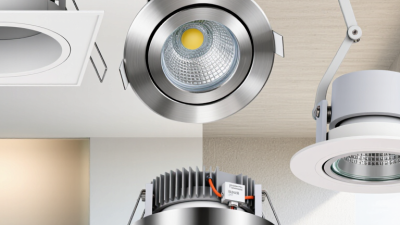
IPX4 vs. IPX5: The IEC 60529 Test Uses a 12.5 L/min Water Jet for IPX5

When comparing waterproof downlight manufacturers in China, ask what “waterproof” means in a documented test. IEC 60529:2013, clauses 14.2.4–14.2.5, distinguishes IPX4 splash testing from the IPX5 water-jet test. IPX5 uses a 6.3 mm nozzle delivering 12.5 L/min, with a ±5% tolerance. The usual test distance is 2.5–3 metres. Exposure lasts one minute per square metre of enclosure surface, with a three-minute minimum. Those figures are test conditions, not marketing shorthand.

The difference matters above a shower or near an outdoor entry. IPX4 checks splashing from different directions; IPX5 applies a directed jet. Neither rating means the downlight can be submerged. Ask suppliers for the complete laboratory report, including the tested model, nozzle flow, distance, and exposure time. A bare sample is not enough. Check the lens seam, cable entry, and gasket compression, too. An oversized ceiling cutout or pinched gasket can defeat a good seal. This detail is easy to miss. If the report leaves out test conditions, request clarification before comparing products.

Safety and Quality Checks: IEC 60598-1 Requirements for Luminaires

For waterproof downlights, “waterproof” is not a complete safety specification. IEC 60598-1 sets general luminaire requirements, including protection against electric shock, insulation, wiring, temperature rise, and mechanical strength. A competent supplier should provide test reports for the exact model, not only a certificate for a similar product. Check the rated voltage, marking, earthing method, and installation instructions against the sample in your hands. Small details matter: a pinched gasket or loose terminal can undermine an otherwise careful design.

Water resistance also needs a clear IP rating, assessed under IEC 60529. IPX4 covers splashing water; IPX5 tests resistance to water jets. Neither rating alone proves suitability for every ceiling cavity or bathroom zone. The IEC 60598-1 test framework includes checks such as abnormal operation and thermal performance, helping reveal risks that a quick visual inspection can miss. The IEA’s 2024 Global Status Report for Buildings and Construction estimates that buildings account for about 32% of global energy use, underscoring why safe, durable lighting matters at scale.

Tips: Request the IEC 60598-1 report, IEC 60529 IP test evidence, and a temperature test at the stated operating conditions. Inspect seals after installation. Honestly, documentation can look perfect while site workmanship is not.

How to Compare Chinese Manufacturers: Certifications, Testing, and Customization

When comparing waterproof downlight manufacturers in China, check whether certificates and test reports match the exact model you plan to buy. A factory-level certificate alone may not cover every trim, driver, or housing option. Request reports showing the tested IP rating, sample configuration, and test date. For a bathroom ceiling, confirm how the fitting performs when installed in the specified orientation. Ask for evidence.

Tips: Compare documents side by side. Check model numbers, not just logos. Details matter.

Testing should reflect real use, not just a sales sample. Ask how the manufacturer checks seals, cable entries, and repeated production batches. A clear inspection plan is useful, but it cannot replace independent test evidence. One easy-to-miss gap is a report for a similar-looking fixture with a different gasket or driver. That deserves a follow-up question.

Customization can cover beam angle, color temperature, dimming, cut-out size, and finish. Get each change listed in the quotation and sample approval record. Ask whether it affects waterproof performance, lead time, or minimum order quantity. In practice, a sample may differ slightly from bulk production; request a signed specification and agree on acceptable tolerances before placing an order.

Best Waterproof Downlight Manufacturers in China? - How to Compare Chinese Manufacturers: Certifications, Testing, and Customization

Use this checklist to compare suppliers based on verifiable product evidence. Requirements vary by destination market and installation; request documentation for the exact model and configuration being quoted.

Comparison dimension What to compare Evidence to request How to assess it
Water and dust protection IP rating, the parts covered by the rating, and suitability for the intended ceiling and exposure conditions. Test report identifying the exact model and configuration; installation instructions; details of seals, gaskets, and driver enclosure. Check the rating against IEC 60529 terminology and confirm what was tested. An IP rating alone does not establish suitability for immersion or every wet-location installation.
Market-specific safety compliance Applicable electrical-safety requirements for the destination market and product type. Current certificate or declaration, supporting test reports, and a matching model number, factory, and product configuration. Verify scope and validity with the issuing body or official database where available. CE marking is a manufacturer’s declaration of conformity, not a general-purpose product certificate.
Photometric performance Measured light output, efficacy, beam distribution, color temperature, color rendering, and dimming behavior. Photometric test report for the quoted luminaire, including test conditions and model identification; IES or equivalent photometric file when needed. Compare like-for-like complete-luminaire results, not LED-chip data alone. LM-79 is a commonly used method for measuring solid-state lighting product performance.
Lifetime and thermal evidence LED lumen-maintenance data, operating temperature, driver rating, and stated lifetime assumptions. LM-80 data for the LED source and any TM-21 projection; thermal test details; separate specifications for the driver and other components. Do not treat an LED-package projection as a guaranteed lifetime for the complete luminaire. Check the stated conditions and warranty terms.
Construction and materials Housing and trim materials, corrosion resistance, lens material, gasket design, and replaceable components. Bill of materials or material specifications, drawings, sample unit, and relevant corrosion or environmental test reports if required. Match materials and finishes to the installation environment. Confirm that any tested configuration uses the same seals, lens, and driver arrangement as the order.
Customization capability Available options such as cut-out size, trim finish, color temperature, beam angle, dimming interface, cable, and packaging. Configuration sheet, dimensioned drawings, prototype sample, minimum order quantities, tooling charges, and written confirmation of lead times. Confirm which options are standard and which require redesign or new testing. Recheck compliance evidence whenever a change could affect safety, sealing, or performance.
Quality control and traceability Incoming inspection, in-process checks, final inspection, batch identification, and handling of defects. Quality-control procedure, sample inspection records, product labels, batch codes, and corrective-action process. Ask how production units are checked against the approved sample and specification. An ISO 9001 certificate relates to a quality-management system, not proof that a specific luminaire is compliant.
Warranty and after-sales support Warranty duration, exclusions, replacement process, spare-part availability, and response arrangements. Written warranty, service contact, spare-parts list, and documented procedure for claims and product changes. Review the actual terms, including installation and operating conditions, rather than relying on a headline warranty period.

Practical comparison rule: evaluate the exact product configuration, verify documents independently when possible, and approve a production-representative sample before ordering.

Choosing a Supplier: Match IP Rating, Installation Site, and Product Warranty

When comparing waterproof downlight manufacturers in China, start with the installation site, not the catalogue headline. A shower ceiling, a steamy bathroom, and a covered balcony face different water exposure. IEC 60529 defines IP codes: the first digit covers solid-object protection, and the second covers water protection. IP65 means dust-tight protection and resistance to water jets, but it does not guarantee suitability for every wet location. Check an ingress-test report for the exact model, trim, driver, and installation orientation. The U.S. Department of Energy’s 2020 U.S. Lighting Market Characterization estimated LEDs represented about 48% of installed lighting that year. Reliable performance and replacement records matter. Efficiency alone is not enough.

Ask suppliers for warranty terms in writing. Confirm the duration and whether the driver, corrosion, moisture ingress, labor, and replacement shipping are covered. A five-year LED-chip warranty may leave the driver uncovered. Read the exclusions. Request installation instructions showing gasket placement, ceiling thickness, and required clearance around insulation. For coastal sites, ask how the materials handle salt exposure. I would still check that every document names the same product model; supplier paperwork can look complete while omitting a key component. Warranty length matters, but clear coverage and a practical claim process matter more.