What is Induction Downlight Benefits Features and Applications Explained
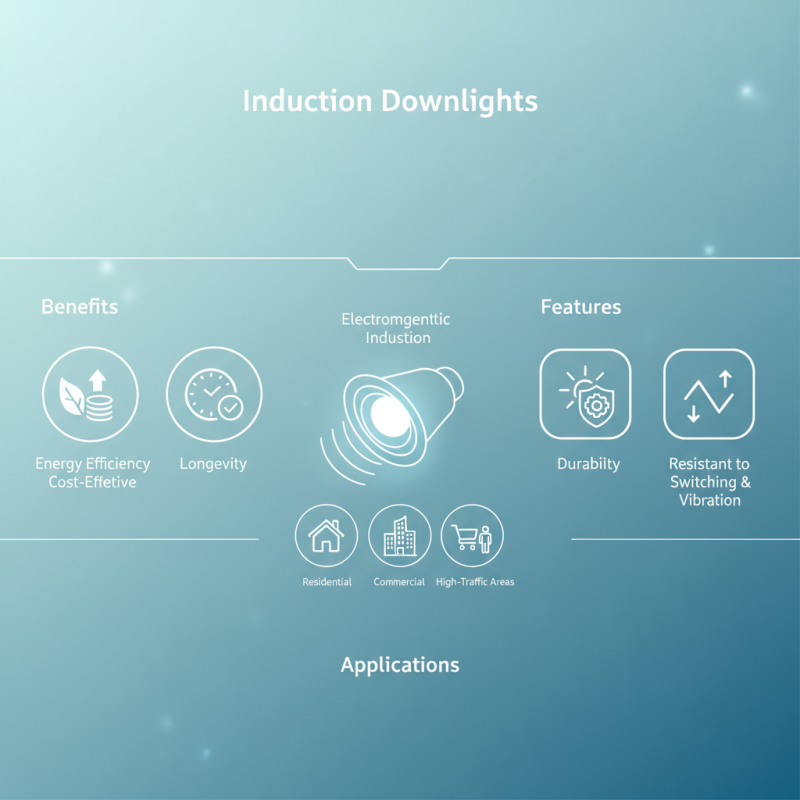
Induction downlights have emerged as a cutting-edge lighting solution, offering a remarkable blend of energy efficiency, longevity, and versatile applications. At the heart of this innovation lies the principle of electromagnetic induction, which allows these fixtures to produce light without the need for traditional filaments or electrodes. As a result, induction downlights not only consume significantly less energy compared to conventional lighting options, but they also boast lifespans that extend beyond several years, making them a cost-effective choice for both residential and commercial spaces.
The benefits of induction downlights go beyond mere energy savings. Their unique design promotes uniform light distribution, reducing glare and creating a comfortable environment conducive to various activities. Moreover, these lights are renowned for their durability, being resistant to frequent switching and vibrations, which makes them ideal for high-traffic areas. In this exploration of induction downlight features, benefits, and applications, we will delve into how this technology is revolutionizing the way we illuminate our spaces, enhancing aesthetics while prioritizing sustainability.
What is Induction Downlight?
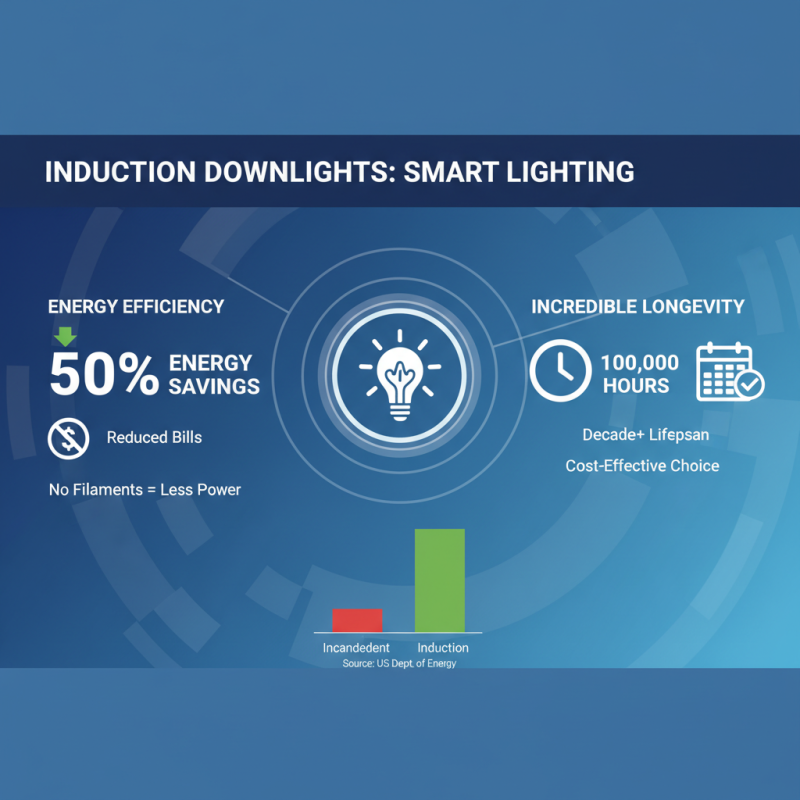
Induction downlights are an innovative lighting solution that is gaining popularity in various applications due to their energy efficiency and longevity. Utilizing electromagnetic induction, these downlights produce light without traditional filaments, significantly reducing energy consumption. According to a report by the U.S. Department of Energy, induction lighting can provide up to 50% energy savings compared to conventional incandescent fixtures. Furthermore, these lights have an average lifespan of 100,000 hours, making them a cost-effective choice for both residential and commercial spaces.
One of the standout features of induction downlights is their ability to maintain a consistent light quality over time. Unlike some LED options, they do not suffer from lumen depreciation, ensuring that the brightness remains high throughout their operational life. This quality is essential in settings such as retail or hospitality, where lighting plays a crucial role in customer experience. Additionally, the reduced heat output associated with induction downlights minimizes air conditioning costs, further enhancing their energy-efficient reputation.
Tips: When selecting induction downlights, consider the color temperature that best suits your environment. Warmer tones (around 3000K) are ideal for creating a cozy atmosphere, while cooler tones (around 5000K) can enhance focus in workspaces. Before installation, ensure compatibility with existing dimmer switches to maximize functionality and performance.
Key Benefits of Induction Downlights
Induction downlights are gaining popularity for their unique advantages in both residential and commercial lighting applications. One of the key benefits of induction downlights is their remarkable energy efficiency. By utilizing electromagnetic induction, these lights convert electrical energy into light with minimal waste, significantly reducing energy consumption compared to traditional incandescent or fluorescent lighting. This leads not only to lower utility bills but also to a reduced carbon footprint, making them an environmentally friendly choice.
Another compelling feature of induction downlights is their long lifespan. Typically offering over 100,000 hours of illumination, they outlast conventional lighting options by a substantial margin. This longevity translates to reduced maintenance costs, as fewer replacements are needed over time. Additionally, induction downlights produce consistent, high-quality light without flickering or color degradation, ensuring a pleasant and reliable illumination experience. Their versatility allows them to be utilized in various settings, from commercial spaces to modern homes, enhancing both aesthetics and functionality in any environment.
Features of Induction Downlights
Induction downlights are a modern lighting solution that offers a variety of features beneficial for both residential and commercial spaces. One of the most notable characteristics of induction downlights is their energy efficiency. Utilizing electromagnetic induction, these lights produce illumination without traditional filaments, resulting in lower energy consumption and reduced electricity bills. With longevity often exceeding 100,000 hours, induction downlights also minimize the need for frequent replacements, offering long-term cost savings.
Another attractive feature is their superior light quality. Induction downlights emit bright, high-quality light with excellent color rendering capabilities, making them ideal for spaces requiring accurate color representation, such as art galleries or retail environments. Additionally, their ability to operate in a range of temperatures and conditions ensures reliability in various applications, from homes to industrial settings.
Tips: When selecting induction downlights for your space, consider factors such as lumen output, color temperature, and beam angle to ensure you achieve the desired ambiance and functionality. It's also essential to assess the installation location to maximize the usability and aesthetic of the lighting.
What is Induction Downlight Benefits Features and Applications Explained - Features of Induction Downlights
| Feature |
Description |
Benefits |
Applications |
| Energy Efficiency |
Induction downlights consume significantly less energy than traditional lighting systems. |
Lower electricity bills and reduced carbon footprint. |
Commercial buildings, residential homes, and public spaces. |
| Long Lifespan |
Induction downlights have a lifespan of up to 100,000 hours. |
Reduced maintenance costs and less frequent replacements. |
Warehouses, factories, and other high-use areas. |
| High-Quality Light |
Induction lighting provides consistent and high-quality light distribution. |
Improved visibility and comfort in workspaces. |
Retail environments and galleries. |
| Eco-Friendly |
No harmful materials such as mercury in the lighting elements. |
Safer for the environment and human health. |
Green buildings and sustainable projects. |
| Instant On |
Induction fixtures reach full brightness immediately without flickering. |
Reduced waiting time for illumination. |
Safety and security applications, such as parking lots. |
Applications of Induction Downlights in Various Settings
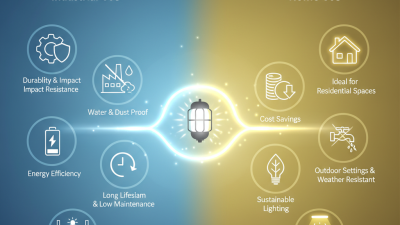
Induction downlights are versatile lighting solutions that have found applications across various settings due to their energy efficiency and longevity. One prominent application is in commercial spaces, where they illuminate retail environments, offices, and exhibition halls. Their ability to provide uniform, high-quality light helps enhance the shopping experience and improve productivity in office surroundings. The durability of induction downlights also means lower maintenance costs, making them an attractive option for businesses looking to optimize their lighting without frequent replacements.
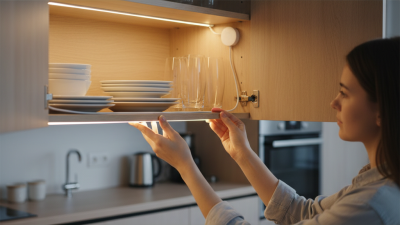
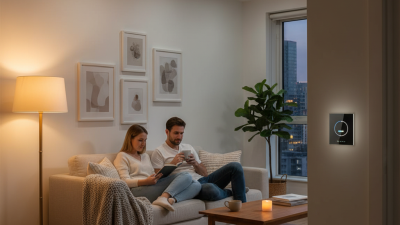
In residential settings, induction downlights are increasingly popular for their sleek design and excellent energy savings. They can be installed in kitchens, living rooms, and hallways, creating a modern ambiance while minimizing electricity consumption. Additionally, induction downlights are ideal for outdoor applications, such as pathways, gardens, or patios. Their resistance to harsh weather conditions ensures that outdoor spaces remain well-lit and safe without the fear of frequent bulb replacements. As energy efficiency and sustainability become more critical, the adoption of induction downlights in both residential and commercial spaces is set to grow even further.
Induction Downlight Applications in Various Settings
Comparing Induction Downlights with Traditional Lighting Options
Induction downlights are emerging as a superior alternative to traditional lighting solutions such as incandescent and fluorescent bulbs. One of the standout advantages of induction downlights is their impressive energy efficiency, which can lead to energy savings of up to 75% compared to conventional lighting systems. According to a report by the U.S. Department of Energy, this level of efficiency can significantly reduce electricity costs for businesses and homeowners alike. Additionally, induction lighting has a longer lifespan, lasting up to 100,000 hours, which dramatically reduces the need for frequent replacements and minimizes waste.
When comparing induction downlights with traditional options, it's essential to consider light quality. Induction lights produce a consistent and uniform light output without flickering, which is a common issue with fluorescent bulbs. This quality of light is beneficial for environments requiring precise visibility, such as retail spaces and offices, enhancing both the aesthetic appeal and functionality of a space. Furthermore, induction lights are less prone to heat generation, making them safer and more comfortable for occupants.
Tip: When transitioning to induction downlights, ensure proper installation to maximize performance and longevity. It's beneficial to work with a professional who understands electrical systems and can optimize the layout for even light distribution.
Another crucial factor is the environmental impact. Induction downlights typically contain no harmful substances such as mercury, which is often found in traditional fluorescent lights. This makes induction lighting a more sustainable option, contributing to a greener planet while meeting the increasing consumer demand for eco-friendly solutions.
Tip: Consider utilizing smart lighting controls alongside induction downlights for enhanced energy management, allowing for adjustments based on occupancy and natural light levels, which can further boost energy savings.

 +86 18968869621
 CONTACT NUMBER