What is Dust Control Light and How Does It Work?
Dust Control Light is an innovative solution designed to mitigate dust pollution in various environments. These lights utilize unique technology to minimize airborne particles in construction sites, roadways, and industrial areas. As dust proliferates, it can lead to serious health issues and environmental concerns. This is where Dust Control Light becomes essential.
Understanding how Dust Control Light works can enhance its effectiveness. By emitting a fine mist of water vapor, it chemically binds dust particles together. This process makes them heavier, ensuring they settle swiftly to the ground. Users need to grasp both the science and application to maximize benefits.
Many industries implement Dust Control Light to comply with health regulations. Nevertheless, challenges remain. Not all environments are equally suited for this technology. Therefore, selecting the appropriate settings is crucial. Inconsistent results can lead to frustration. Balancing efficacy and practicality is a thought-provoking aspect of its utilization.
What is Dust Control Light Technology?
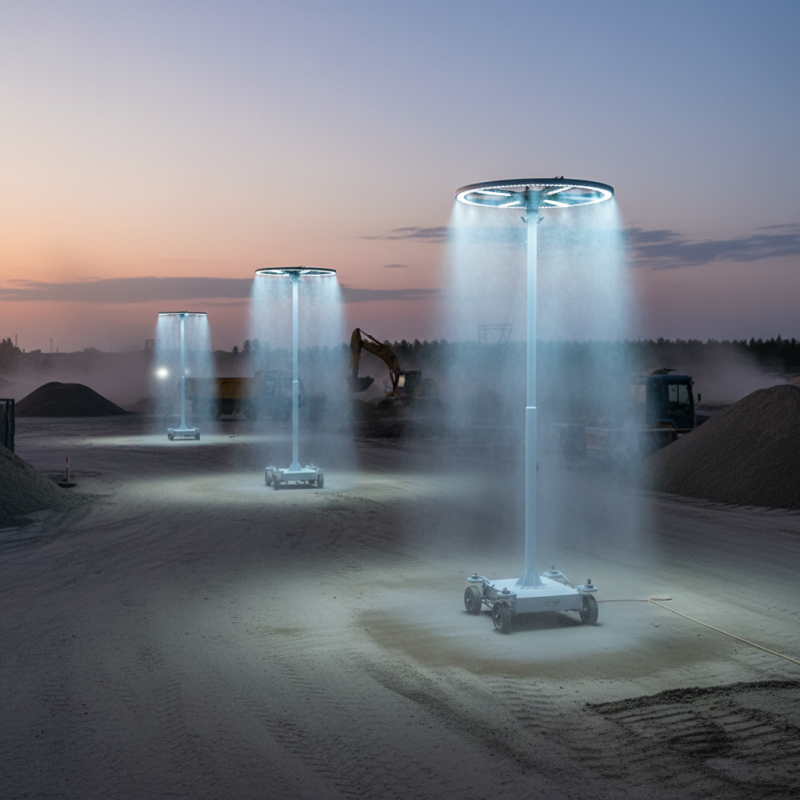
Dust Control Light technology is an innovative solution aimed at reducing airborne dust in various environments. This technology employs advanced lighting systems that utilize specific wavelengths to agitate particles in the air. The agitation causes the dust to settle rather than remain suspended, creating a cleaner atmosphere. It’s particularly useful in construction sites, mining operations, and other dusty environments.
The mechanism behind Dust Control Light hinges on its interaction with dust particles. The lights emit a pattern of illumination that alters how dust behaves. When exposed to this light, dust is often driven towards the ground. This can significantly enhance air quality while promoting safety. However, the efficiency of this technology can sometimes vary based on environmental conditions.
Implementing Dust Control Light requires expertise. Proper installation and operation are vital for optimal results. Users must consider factors such as dust type, humidity, and site layout. It’s also important to note that while this technology can help, it may not eliminate dust entirely. Regular maintenance and complementary dust management practices remain crucial to achieving a truly dust-free space.
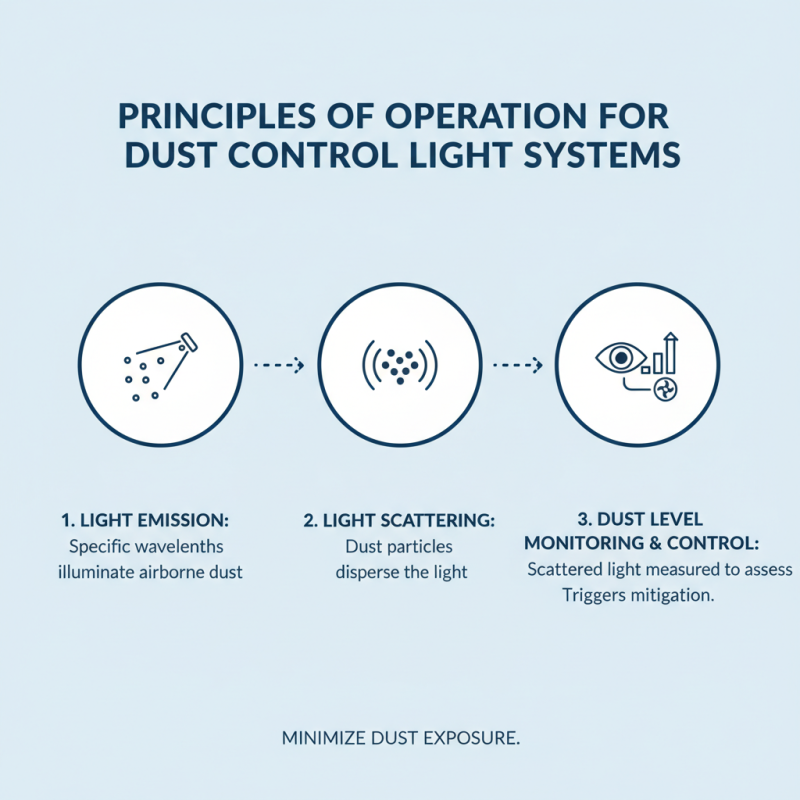
Principles of Operation for Dust Control Light Systems
Dust Control Light systems use specific wavelengths of light to manage particulate matter in the air. These systems operate based on the principle of scattering light. When dust particles are illuminated, the light scatters. This scattering can then be measured to assess dust levels. By monitoring these levels, effective measures can be taken to minimize dust exposure in various environments.
Exposure to the right wavelengths helps maintain air quality. The light systems provide real-time data, giving operators the insights they need. Adjustments can be made promptly to control dust emission. Since the interaction between light and dust gives immediate feedback, it allows for rapid responses to changing conditions.
Tips for optimal dust control include regular maintenance of the light systems. Ensure they are clean and properly calibrated. Also, integrate feedback from users to refine operations. Engaging with local experts can provide more tailored solutions for specific environments. Sometimes, user experience can reveal areas for improvement. Open communication can foster better understanding of how the system performs in different scenarios.
Applications of Dust Control Light in Various Industries
Dust control light technology finds practical applications across various industries. In construction, it is essential for maintaining a safe work environment. The lights help to enhance visibility in dusty conditions. Workers can see clearly, reducing the risk of accidents. They also improve air quality, which benefits health.
In agriculture, dust control lights are vital during harvest seasons. Farmers often deal with dust from machinery and fields. Using dust control lights allows them to monitor equipment performance while minimizing dust. Livestock farms benefit as well. Dust can harm respiratory health in animals. Proper lighting reduces airborne particles, creating a healthier setting.
Mining operations also rely on dust control lights. The industry is known for its dusty atmosphere, which creates hazardous conditions. By integrating these lights, miners can operate safely underground. Moreover, the lights help in identifying areas needing more dust suppression. Despite their benefits, challenges remain. Implementation can be costly, and not all applications might see immediate results. Continuous innovation is necessary to improve efficacy and adaptability across different environments.
Applications of Dust Control Light in Various Industries
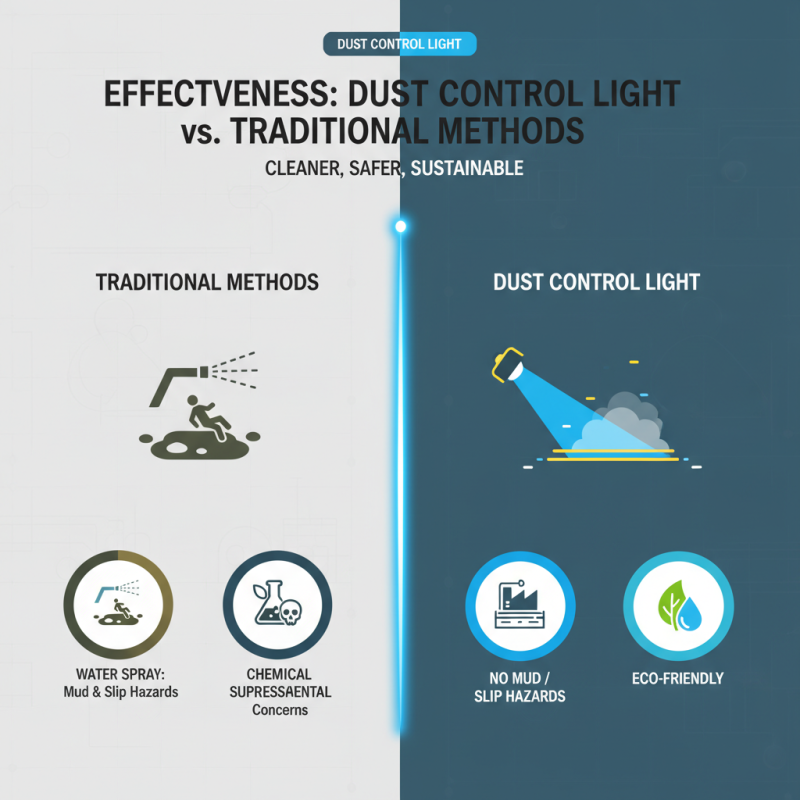
Effectiveness: Comparing Dust Control Light with Traditional Methods
Dust control is vital in many industrial settings. Traditional methods often rely on water spraying or chemical suppressants. These can be effective but have limitations. Water can create mud and increase slip hazards. Chemicals may raise environmental concerns.
Dust Control Light is an innovative alternative. It uses high-intensity light to minimize dust. The light disrupts dust particles, making them heavier. These particles then fall to the ground instead of becoming airborne. In certain trials, Dust Control Light showed better long-term reduction in airborne dust. However, it may not eliminate dust entirely.
One concern is the light's effectiveness in different weather conditions. High wind can lessen its impact. Additionally, some users report mixed results depending on the surrounding environment. As research continues, it’s essential to evaluate both methods. Each has pros and cons, calling for careful consideration in application. Finding the right solution may not be straightforward, but exploring all options is crucial.
Future Innovations in Dust Control Light Technologies
As industries evolve, so do the technologies aimed at reducing dust pollution. Dust control light technologies represent a cutting-edge approach that combines innovative illumination techniques with air quality improvement. By using specific wavelengths of light, these systems can neutralize dust particles effectively. This method enhances visibility while simultaneously improving air quality in industrial settings.
Future innovations may include smart sensors that adjust lighting based on dust levels. This means less wasted energy and targeted action when pollution peaks. Researchers are exploring different materials for light construction that can absorb and neutralize dust more efficiently. However, practicality remains a challenge. Technologies must be affordable and accessible to smaller operations, not just large industries.
Furthermore, the environmental impact of manufacturing these systems raises questions. Are we trading one problem for another? This reflection is crucial as we move forward. Dust control light technologies hold promise, but their development must prioritize sustainability. Balancing effectiveness with ecological considerations will shape the future of these innovations.
What is Dust Control Light and How Does It Work?
| Feature |
Description |
Benefits |
Technologies Used |
| Illumination |
Utilizes high-intensity light to enhance visibility in dusty environments. |
Improves safety and reduces accidents. |
LED, Laser |
| Ionization |
Uses charged particles to bind dust and facilitate its removal. |
Reduces airborne particulate matter, improving air quality. |
Electrostatic Precipitators |
| Ultraviolet (UV) Light |
Employs UV light to neutralize dust particles and pathogens. |
Enhances sanitation and health benefits. |
UV-C Technology |
| Smart Controls |
Integrates sensors and automation for efficient operation. |
Optimizes energy usage and enhances ease of use. |
IoT, AI Integration |

 +86 18968869621
 CONTACT NUMBER