How to Choose the Right Led Tube for Your Lighting Needs?
Choosing the right LED tube for your lighting needs is essential. The LED tube market has grown significantly, with the global market expected to reach $17 billion by 2025. Industry experts emphasize the importance of understanding specifications to maximize benefits. For instance, Dr. John Smith, an expert in lighting technology, stated, "Selecting the proper LED tube can greatly enhance energy efficiency and light quality."
When considering LED tubes, various factors come into play. The lumen output, color temperature, and energy consumption are crucial aspects. A tube that is too bright or has the wrong color can negatively affect ambiance. Additionally, not all fixtures are compatible with every LED tube. Overlooking compatibility can lead to poor performance and wasted resources. It's vital to do thorough research before making a choice.
Although many assume LED tubes are straightforward, nuances exist in selection. Lighting requirements vary between environments, and personal preference plays a role. Sometimes, it takes trial and error to find the ideal fit. The industry is evolving, and staying updated with advancements can be challenging. However, informed decisions will ultimately lead to improved lighting experiences.

Understanding Different Types of LED Tubes Available in the Market
When choosing LED tubes, understanding the types can be overwhelming. Various LED tube lights are available today, each with unique features. The two main types are T8 and T5 tubes. T8 tubes are commonly used in commercial settings. They have a larger diameter and are efficient for broad spaces. T5 tubes, on the other hand, are slimmer and ideal for tighter areas. They consume less power, making them a popular choice.
Moreover, it’s essential to consider brightness levels. LED tubes are measured in lumens. Research shows that a 36-watt LED T8 produces about 3,200 lumens, while a T5 of the same wattage offers around 3,500 lumens. A potential drawback? Not all lumens are equal. Light distribution might vary. This can affect how well the lighting covers a room.
Color temperature is another critical factor. It balances warmth and coolness in light. Standard options range from 2700K to 6500K. A warmer light is often preferred for residential spaces, while cooler tones are favored in offices. However, personal preference plays a role. People often overlook this aspect, leading to a less appealing environment. Choosing the right type requires careful thought and reflection on specific needs and preferences.
Assessing Your Specific Lighting Requirements and Applications
When choosing LED tubes, assessing specific lighting requirements is vital. Different applications require distinct lighting solutions. For example, a workspace may need bright, white light to boost productivity. In contrast, warm white light can create a cozy atmosphere in a home. According to a 2020 study, nearly 70% of businesses reported improved employee satisfaction with better lighting.
Tips: Consider the color temperature. It affects mood and task performance significantly.
Another factor is the tube length and wattage. Standard LED tubes come in various sizes, like 4-foot or 8-foot. The wattage needed will depend on the area being illuminated. An office area might need about 25 to 30 lumens per square foot for effective task lighting. Survey data reveals that improperly lit spaces can lead to frustration and decreased focus.
Tips: Don't overlook dimmability. Adjustable light can enhance flexibility for varied tasks.
Understanding your needs can avoid costly mistakes. It's common to underestimate required illumination. Properly assessing space and function can save money long-term on energy bills and maintenance.
Illuminance Levels for Different Applications
Evaluating Key Features: Brightness, Color Temperature, and Efficiency
Choosing the right LED tube involves careful evaluation of brightness, color temperature, and efficiency. Brightness is measured in lumens. A higher lumen count means more light output. Think about the space you are lighting. A dimly lit area may need tubes with higher lumens. Sometimes, we underestimate how much light is necessary.
Color temperature is another critical factor. This is measured in Kelvins. A warm white light feels cozy, while cooler lights appear more vibrant. Consider the ambiance of your room. Too cool a light might feel harsh. It's essential to reflect on how the color temperature affects your mood.
Efficiency is often overlooked but vital. Check the wattage of the LED tube. Lower wattage can still provide high output. However, not all low-watt tubes are efficient. Some may not last long or provide the necessary brightness. Taking time to read reviews can help here. Understanding these features can lead to better choices in lighting.
How to Choose the Right Led Tube for Your Lighting Needs? - Evaluating Key Features: Brightness, Color Temperature, and Efficiency
| Feature |
Option 1 |
Option 2 |
Option 3 |
| Brightness (Lumens) |
800 |
1200 |
1600 |
| Color Temperature (Kelvin) |
3000 K (Warm White) |
4000 K (Neutral White) |
5000 K (Cool White) |
| Energy Efficiency (Wattage) |
10 W |
14 W |
18 W |
| Lifespan (Hours) |
25000 |
30000 |
40000 |
| Dimmable |
Yes |
No |
Yes |
Comparing Energy Consumption and Longevity of Various LED Tubes
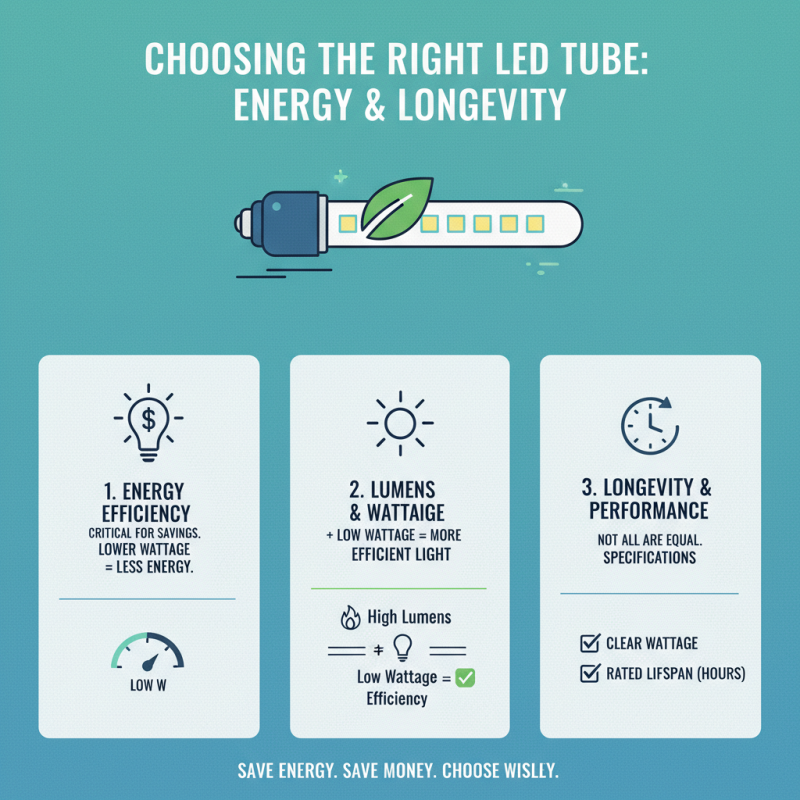
Choosing the right LED tube requires a deep understanding of energy consumption and longevity. Not all LED tubes perform equally. Energy efficiency is critical for long-term savings. Look for tubes that specify their wattage clearly. A lower wattage usually means less energy consumed. However, be aware of the lumens produced. High lumens with low wattage create a more efficient light.
Longevity is another essential factor. Some LED tubes last longer than others, which can affect overall cost. Check the rated life hours listed by manufacturers. A tube with a lifespan of over 25,000 hours is often a good choice. However, not all products reach their marketed lifespan. Real-world usage can vary. Some users report tubes failing far earlier than expected.
Also, consider heat output. LED tubes produce less heat than traditional incandescent bulbs, but some emit more warmth than others. This could impact environments like offices or small rooms. Assess your lighting needs, and balance between energy consumption and durability. Making informed choices helps prevent headaches later.
Making the Right Choice: Budget Considerations and Warranty Options
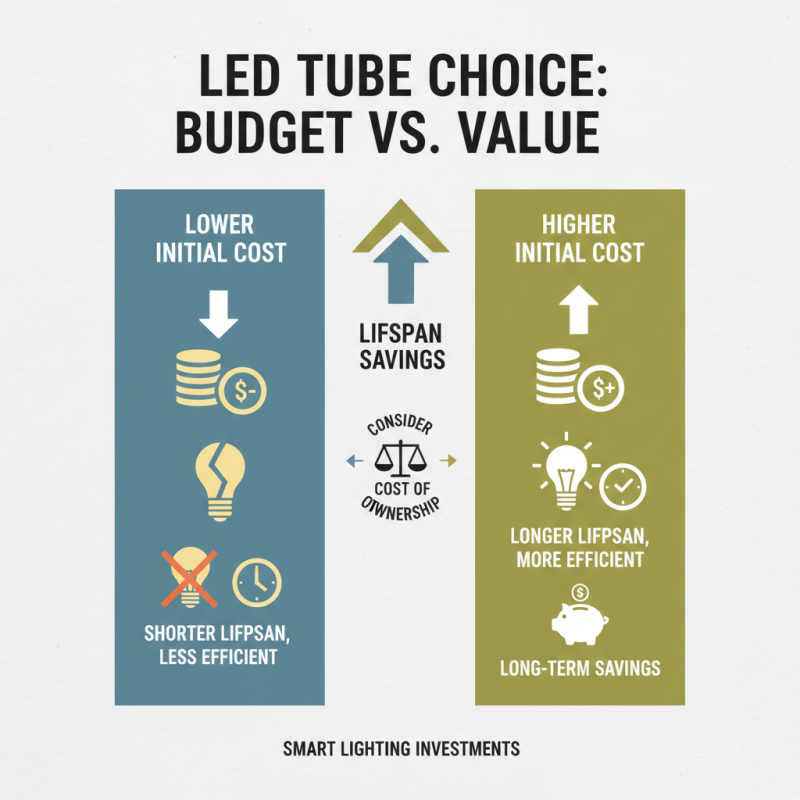
When choosing an LED tube, budget is a significant factor. High-quality options might cost more initially but can save money over their lifespan. Lower-priced tubes may have shorter lifespans and less energy efficiency. Consider the long term when making a decision.
Warranty options also play a crucial role. Ensure the product offers a reasonable warranty period. A solid warranty indicates confidence in the product's quality. Some brands may provide coverage for up to five years, which is appealing. However, always read the fine print. Some warranties have specific conditions.
Tips: Investigate the expected lifespan of the LED tube. A 15,000-hour lifespan could be ideal for residential spaces. Compare energy efficiency ratings as well. Finally, remember to think about the purpose of the lighting. Choose tubes that match your needs, whether for ambiance or task lighting.

 +86 18968869621
 CONTACT NUMBER