2026 How to Choose the Perfect Dimmer Light for Your Home?
Choosing the perfect dimmer light for your home can completely transform your living space. Dimmer lights offer versatility and ambiance, making a room feel warm and inviting. They allow you to adjust brightness levels, creating the perfect atmosphere for any occasion.
When selecting a dimmer light, consider your existing fixtures and the room's purpose. A cozy dining area might benefit from softer lighting. In contrast, a bright workspace may require more intense illumination. It’s essential to match the dimmer with the right type of bulb. Not all bulbs dim well, which can lead to frustration.
Some dimmer switches control multiple bulbs, while others may only support one. Remember that compatibility issues can dim your enthusiasm. Choose wisely and think about future needs. As you explore your options, reflect on how light affects your daily life. The perfect dimmer light can elevate your home, but the journey to find it should be thoughtful and precise.
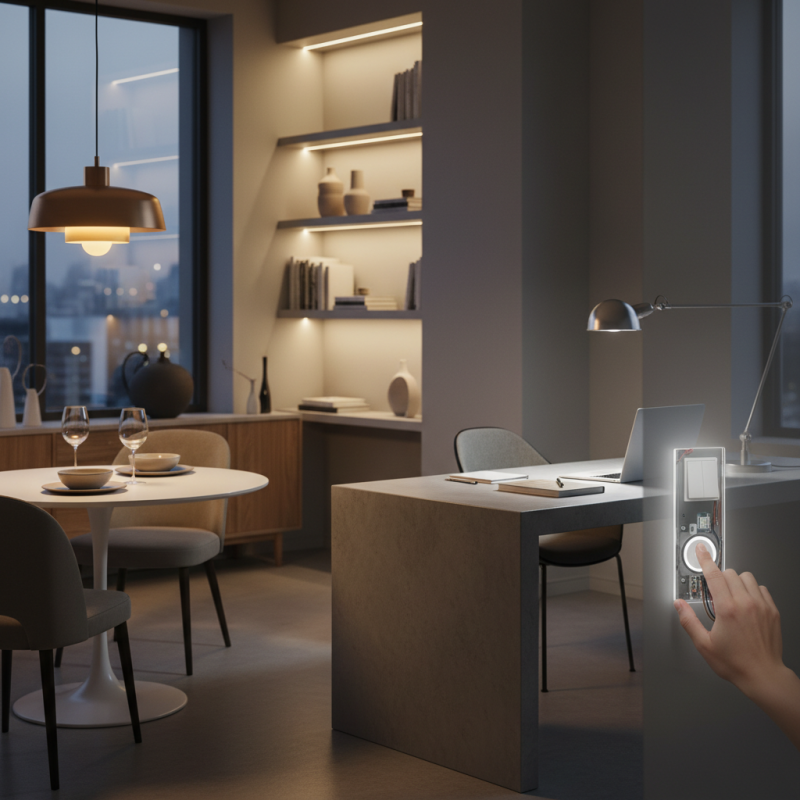
Understanding Different Types of Dimmer Lights Available for Home Use
When choosing a dimmer light for your home, it’s essential to understand the different types available. Most commonly, you’ll find traditional rotary dimmers, which provide a simple turn dial. They are easy to use and install, but may not offer advanced features.
Then there are slide dimmers, allowing for precise light adjustments by moving a slider up and down. These can sometimes be less intuitive, and it might take time to find the perfect setting.
Smart dimmers have gained popularity recently. They connect with your home network, allowing control via smartphone apps. This adds convenience but can be confusing for those not tech-savvy. Additionally, consider the compatibility with your existing bulbs. Some dimmers do not work well with LED lights, causing flickering. It can be frustrating to discover this after installation.
Don't overlook the style of the dimmer. A sleek design integrates well into modern décor. However, an overly simplistic design might not suit more traditional homes. Take time to ponder your choices. A perfect dimmer light should fit your needs, preferences, and lifestyle. Remember, it’s also okay if it takes a few tries to find the right one.
Key Features to Consider When Selecting a Dimmer Light
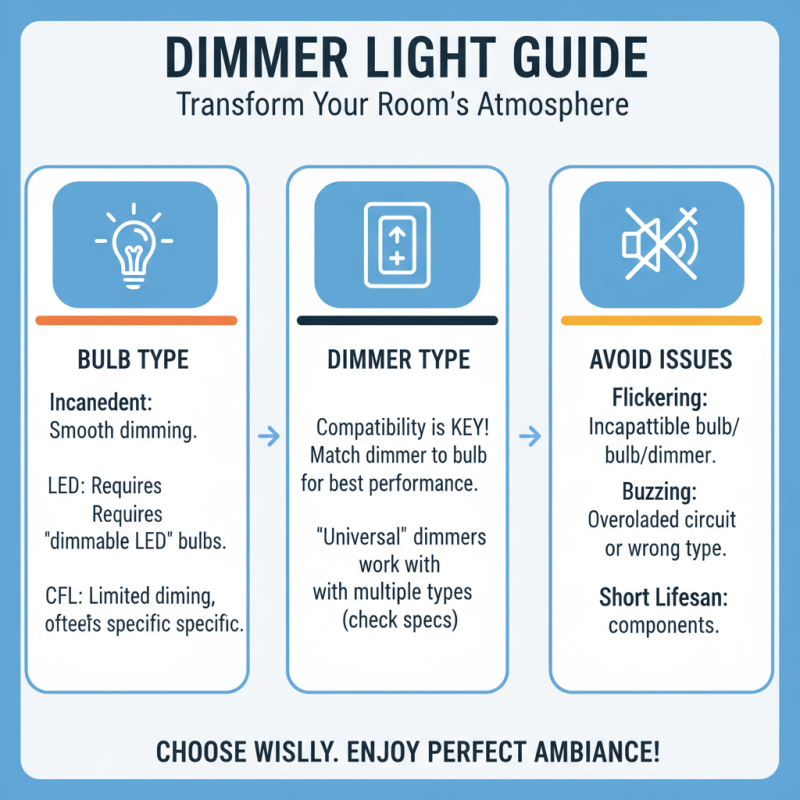
Choosing the right dimmer light can transform a room's atmosphere. Key features are essential for making the best choice. You will want to consider the type of bulb you use. Incandescent, LED, and CFL bulbs all have different dimming capabilities. Some dimmers work better with specific bulb types. It’s crucial to match them correctly to avoid flickering or buzzing noises.
Another important factor is the wattage capacity of the dimmer. Each dimmer has a limit. Exceeding it can lead to overheating and potential hazards. Always check the specifications. A dimmer rated for 600 watts won't suit multiple high-wattage bulbs. Keep this in mind when designing your space.
Compatibility with smart home systems is gaining popularity. Many homeowners prefer app-controlled lights. But, not all dimmers offer this feature. Consider how you plan to use your lighting. Direct control may be more suitable for some. Reflect on your needs, and prioritize them. If you're unsure, seek advice. Investing in the right dimmer light can elevate your home.
Compatibility with Existing Light Fixtures and Bulbs
When choosing a dimmer light for your home, compatibility with existing fixtures and bulbs is crucial. Not all dimmers work with every bulb type. For instance, LED bulbs often require specific dimmers. According to a report by the U.S. Department of Energy, around 30% of homes still use incandescent bulbs, while 50% have switched to LED lights. This shift requires consideration of what dimmer technology matches your lighting.
Often, homeowners overlook the compatibility factor. A dimmer that isn’t suited for LED can lead to flickering or limited dimming ranges. Some reports indicate that improper pairing can actually lead to reduced lamp lifespan, which is a concern. Using a dimmer designed for incandescent bulbs with LEDs may cause issues. Bulb manufacturers indicate that regularly mismatched dimmers can decrease overall efficiency by nearly 40%.
If you're uncertain, it's best to consult product specifications closely. Look for dimmers labeled as "universal" or "compatible." Test the functionality of the dimmer with your existing bulbs before making a final decision. Not everything matches well, and one incorrect choice can lead to frustration later. Compatibility is not merely a preference; it’s essential for achieving the best lighting experience in your home.
2026: Choosing the Perfect Dimmer Lights for Your Home
This chart illustrates the compatibility percentages of various types of bulbs with dimmer switches. Understanding these compatibility levels is essential to ensure optimal performance for lighting in your home.
Installation Options: DIY vs Professional Assistance
When choosing the perfect dimmer light for your home, consider your installation options carefully.
DIY installation can be tempting. It saves money and provides a
sense of accomplishment. However, not everyone is equipped for this kind of work. Improper installation can lead to
flickering lights or even electrical hazards.
Professional assistance brings experience and reliability to the table. Electricians can ensure proper wiring and avoid future
issues. They know how to deal with complex systems that might confuse a novice. But hiring a professional can be costly, and finding a trustworthy
person may take time. You might question if it’s worth the expense.
Ultimately, weigh your skills against the complexity of the task. Each approach has its drawbacks.
Do you risk a DIY failure, or do you invest in a professional's expertise? Reflecting
on these choices might lead to new insights for your home lighting project.
Tips for Maximizing the Benefits of Your Chosen Dimmer Light
Choosing the right dimmer light can greatly enhance your home environment. However, it's important to consider how to maximize its benefits. Research shows that properly dimmed lighting can reduce energy consumption by up to 20%. This means both financial savings and a smaller carbon footprint for your home.
To optimize your dimmer light's performance, start by evaluating the usage of each room. Bright lighting can be harsh and limiting. Use softer, adjustable lighting for areas where you relax or entertain. Studies have shown that softer light can improve mood and promote relaxation, making evenings enjoyable. A common mistake is overlooking compatibility. Ensure your dimmer switch works with the light bulbs you select. Incompatible dimmers can lead to flickering or diminished performance.
Consider layering your lighting. Combine ambient, task, and accent lighting for better control. A single dimmer may not suffice for complex needs. The wrong choice can leave you with uncomfortably bright or dim spaces. According to a report by the American Lighting Association, about 80% of users don’t fully utilize dimmers due to a lack of understanding. Reflect on your habits. Are you using your dimmer to its full potential? Recognizing these factors can enhance your overall lighting experience.

 +86 18968869621
 CONTACT NUMBER