How to Choose the Right Induction Downlight for Your Home?
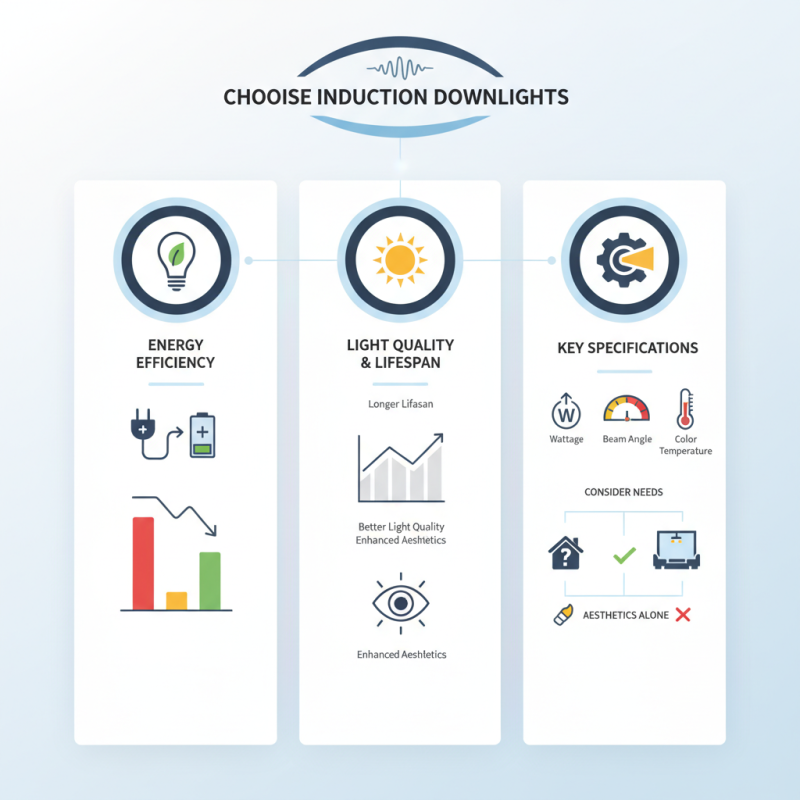
Choosing the right Induction Downlight for your home can greatly impact energy efficiency and ambiance. According to a recent report from the International Energy Agency, efficient lighting technologies can reduce energy consumption by up to 40%. Induction Downlights are a prime example of such technologies. They not only offer longer lifespans but also consume less power compared to traditional lighting.
Moreover, they produce better light quality. This can enhance the aesthetics of your living space. However, many homeowners overlook important specifications. The range of wattages, beam angles, and color temperatures significantly affects lighting outcomes. A study by the Lighting Research Centre emphasizes that poorly chosen downlights often lead to unsatisfactory results and wasted resources.
It's crucial to consider your specific needs. Too often, individuals get overwhelmed by choices. They may select an Induction Downlight based on aesthetics alone. Remember, functionality often trumps style in achieving the most effective illumination. By making informed decisions, you can create a well-lit environment that complements your home.
Understanding the Basics of Induction Downlights: A Comprehensive Overview
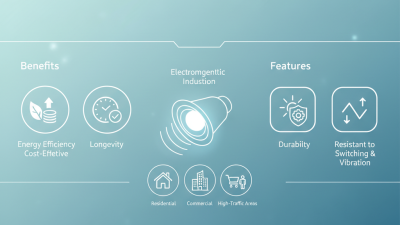
Induction downlights have become popular in modern homes. They offer energy efficiency and durability. These lights use electromagnetic fields to illuminate spaces. A notable report from the Lighting Research Center states that induction lights can last up to 100,000 hours, significantly longer than traditional options.
When choosing induction downlights, consider the color temperature. A study by the International Energy Agency reveals that 2700K to 3000K is ideal for cozy settings. However, too warm a tone may cause fatigue. In contrast, cooler temperatures, like 4000K, can promote alertness. But they might feel harsh in living rooms.
Placement is critical. Overhead lights can create shadows. You may find that too many downlights can lead to a cluttered feel. The balance between brightness and design is vital. Many underestimate this aspect. Proper spacing enhances both aesthetics and functionality. Prioritize comfort; your choices should reflect the mood you want to create.
Key Factors to Consider When Choosing Induction Downlights for Your Home
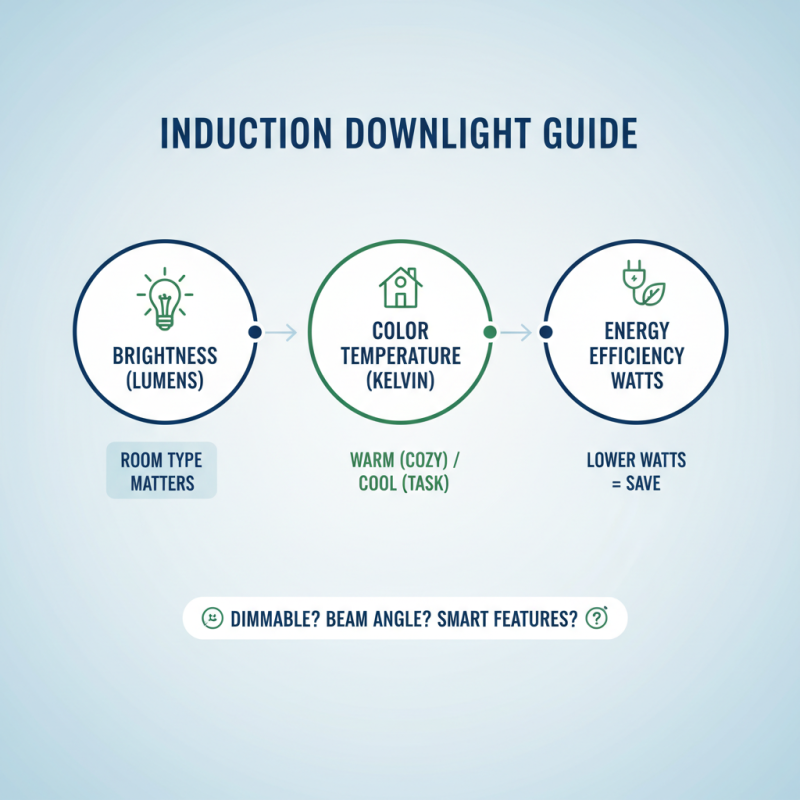
Choosing the right induction downlight for your home can be challenging. Several key factors come into play. Consider the brightness you need, measured in lumens. Different rooms require different levels of light. For example, a kitchen might need more light than a bedroom.
Color temperature is another important aspect. Warm white lights create a cozy atmosphere, while cool white lights are better for task-oriented spaces. It’s wise to think about the mood you want in each area of your home.
**Tip:** Look for adjustable brightness options. This flexibility can enhance your space significantly.
Wattage also matters. Lower wattage bulbs are energy-efficient and can save you money. However, make sure they provide enough light for your needs. Don’t be afraid to experiment with different styles and placements. You might need to try a few setups before you find what works best.
**Tip:** Use dimmers for added control. They can change the ambiance anytime.
Take your time to assess the design of the downlight. Sleek, modern designs may suit contemporary spaces. Yet, traditional homes might benefit from vintage styles. Each choice impacts how these fixtures will fit into your overall decor.
Comparing Energy Efficiency: Induction Downlights vs. Traditional Lighting
Induction downlights and traditional lighting both serve important roles in our homes. Energy efficiency is a key factor for many homeowners. Induction downlights typically consume less energy than traditional incandescent bulbs. They have a longer lifespan, reducing the need for frequent replacements. This can save money over time.
The brightness of induction downlights is impressive. They provide consistent illumination. However, they require a compatible dimming system for flexibility. Some people find the installation process challenging. Traditional lighting might be easier to install for those who prefer simplicity. Yet, it often leads to higher energy bills in the long run.
When considering energy efficiency, think about your daily usage. How long do you keep lights on? This can determine what type of lighting is better for you. Induction lights may have a higher upfront cost. However, the savings on electricity can outweigh this initial expense. Always weigh the pros and cons carefully before deciding.
Understanding Lumen Output and Its Importance in Induction Downlight Selection
When selecting induction downlights, lumen output is a crucial factor. Lumen measures brightness, impacting both ambience and functionality in your space. Studies indicate that a standard living room should have around 1,500 to 3,000 lumens. However, preferences vary based on personal tastes and room dimensions. It’s essential to evaluate these factors before making a decision.
Different environments require distinct lumen outputs. For instance, kitchens need about 5,000 lumens or more for effective task lighting. Conversely, bedrooms can function well with a softer output, around 1,000 lumens. This variation emphasizes how one size does not fit all. Sometimes, individuals may find that their chosen lights are either too dim or overly bright for their needs. Adjustments can be made, but the initial choice is critical.
While lumen output is important, it’s not the only consideration. Other aspects, like color temperature and beam angle, also play roles in creating the desired atmosphere. Achieving the perfect lighting setup may require experimentation. Users often find themselves overwhelmed by choices. It’s okay to reflect on your selections periodically. What works for one room may not work for another. Every home and preference is unique.
Understanding Lumen Output in Induction Downlights
This chart illustrates the lumen output of induction downlights based on varying wattage. As wattage increases, the lumen output also rises, providing better illumination for your home. Choosing the right lumen output is crucial for ensuring the adequate brightness and efficiency of your lighting solutions.
Exploring Installation Options and Compatibility of Induction Downlights
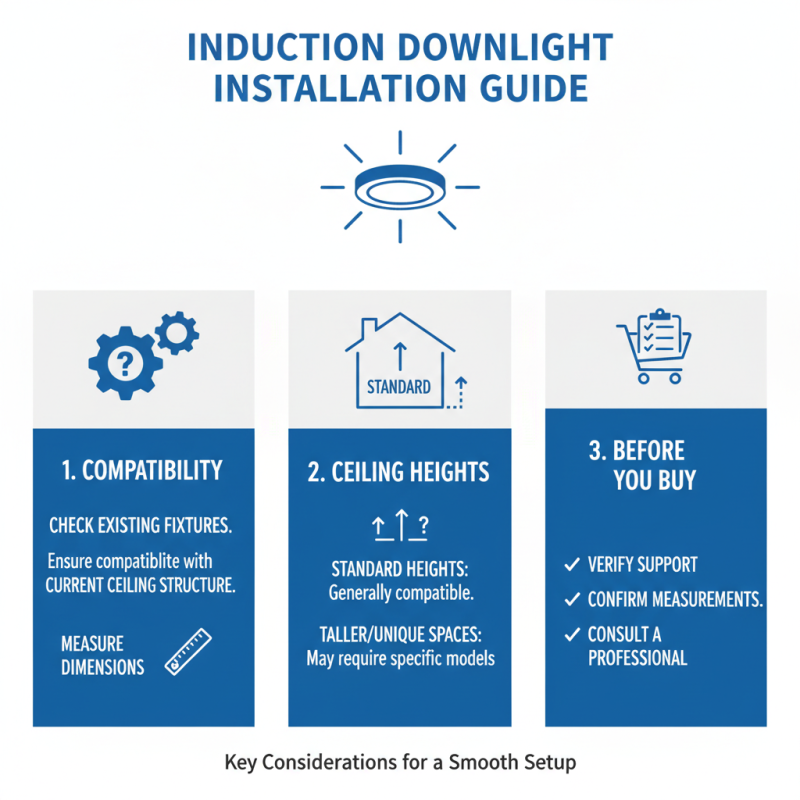
When installing induction downlights, compatibility with existing fixtures is crucial. Ensure your current ceiling structure can support the new lights. Measure the dimensions before making any decisions. Standard ceiling heights work well with most induction downlights, but different spaces can present challenges.
Consider the electrical requirements. Induction downlights typically require specific voltage or wattage levels. Check your wiring to avoid potential issues. A common mistake is ignoring energy efficiency ratings. Light output and power consumption matter, especially for long-term use.
Look at the installation process. Some downlights come with detailed instructions, while others don’t. This can lead to frustration. If you're unsure, seeking help from a professional can make a difference. Sometimes, it’s worth the investment to ensure proper setup. Overall, visualizing how the new lights blend with your decor can help guide your choices.

 +86 18968869621
 CONTACT NUMBER