How to Choose the Best Induction Strip Light for Your Needs?
When it comes to choosing the best Induction Strip Light, the options can be overwhelming. The global market has been growing steadily. According to a report by Grand View Research, the induction lighting market is expected to reach $9.4 billion by 2025. This growth indicates a rising popularity and acceptance of induction technology in various applications.
Experts emphasize the importance of specific needs when selecting an Induction Strip Light. Bob Stevens, a lighting specialist at Lighting Research Center, stated, “Understanding the unique requirements of your environment is crucial for making the right choice.” His insight underscores the need for tailored solutions, reflecting the diverse settings where these lights may be installed.
Furthermore, not all induction lights are created equal. Factors such as lumen output, energy efficiency, and durability must be considered. It’s essential to match these specifications with your lighting goals. Some products may overpromise but underdeliver. Prospective buyers should remain vigilant and do thorough research before deciding. This ensures that the chosen Induction Strip Light meets expectations and offers the best performance for the intended application.
Understanding Induction Strip Lights and Their Benefits
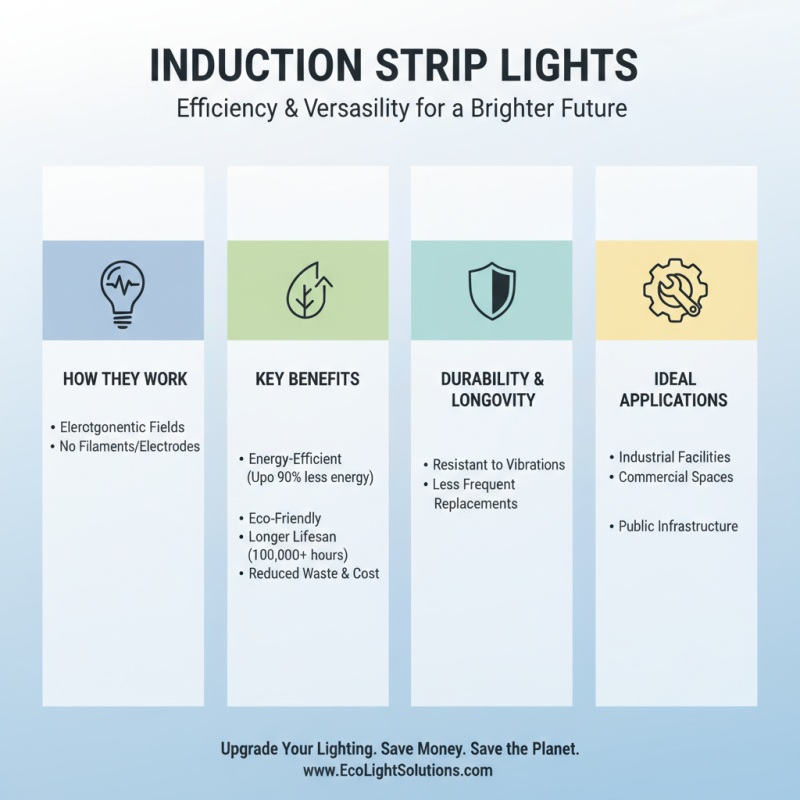
Induction strip lights are becoming popular due to their efficiency and versatility. They utilize electromagnetic fields to produce light, making them eco-friendly and energy-efficient. These lights can last longer than traditional options, reducing the need for frequent replacements. This longevity not only saves costs but also minimizes waste, a significant factor in today’s environmentally-conscious market.
Understanding the benefits of induction strip lights can help you make informed decisions. They illuminate large areas evenly, ideal for commercial and industrial spaces. The lights turn on instantly, providing full brightness without flickering. However, some users report a slightly cooler color temperature compared to warmer LEDs. It’s essential to consider your specific lighting needs before making a purchase.
When selecting induction strip lights, weigh the advantages against your requirements. Analyze your workspace, desired brightness, and color temperature. Some may find the upfront costs higher than conventional lighting. However, the energy savings can balance out over time. It's a good practice to research and read user reviews, as personal experiences can highlight practical aspects that specifications might not cover.
Key Factors to Consider When Choosing Induction Strip Lights
When choosing induction strip lights, several key factors come into play. First, consider the brightness. The lumen output of the light needs to match your intended use. For work areas, higher lumens provide better visibility. A space meant for relaxation may need softer lighting.
The size and length of the induction strip light also matter. Measure your installation area to ensure a good fit. Longer strips cover wider spaces but may create a shadow effect. Think about where you will install the lights. Proper placement can enhance the overall ambiance.
Energy efficiency is another significant factor. Induction lights can be cost-effective over time. Check the wattage and lifespan to gauge performance. Opting for lights with a longer lifespan reduces replacement frequency. This means less hassle and lower long-term costs.
Also, consider the color temperature. Different temperatures create different atmospheres. Warmer lights are cozy, while cooler tones can feel more energizing.
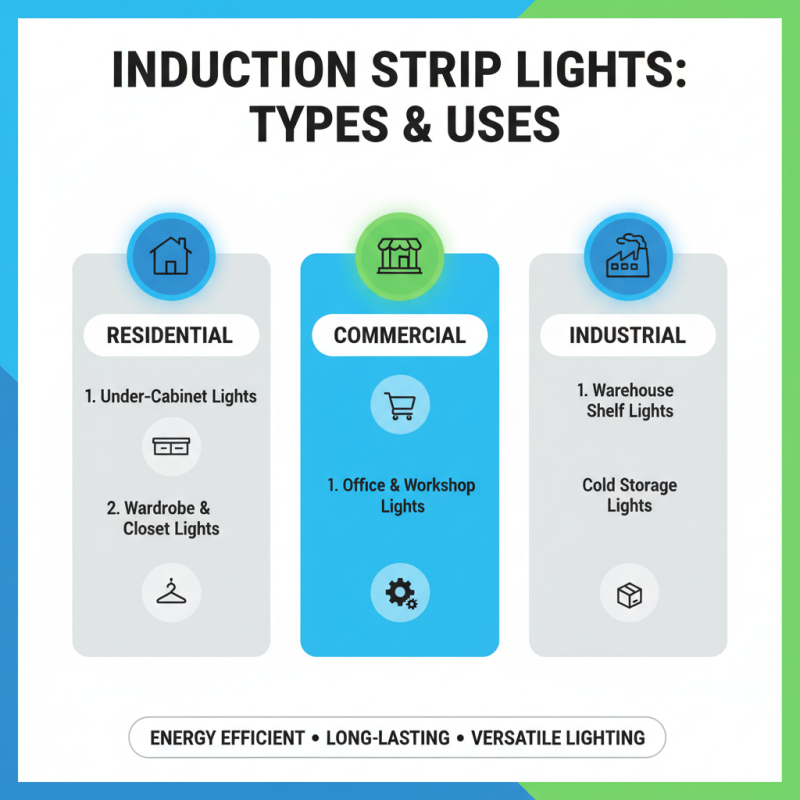
Different Types of Induction Strip Lights Available
Induction strip lights are becoming increasingly popular in various settings. They offer energy efficiency and longevity, making them a favorite choice for both residential and commercial use. Understanding the types available is crucial for making the right selection.
There are primarily three types of induction strip lights: linear, flexible, and high-bay lights. Linear induction strips are commonly used for ceiling installations and provide uniform lighting for larger areas. They can cover up to 20 feet, which enhances their utility in warehouses or factories. High-bay lights typically reach heights of over 20 feet and are designed for vast spaces such as gymnasiums and manufacturing plants. They can reduce energy costs by up to 50% compared to traditional lighting, according to the U.S. Department of Energy.
Flexible induction lights are gaining traction in creative applications. They can be bent and shaped, making them ideal for unique installations and tight spaces. Their versatility highlights the importance of considering the space and purpose of use when choosing induction strip lights. However, some users report challenges with installation and placement. It's essential to evaluate the lighting needs carefully before purchasing, as not all options will suit every application.
Evaluating Performance Specifications of Induction Strip Lights
When selecting induction strip lights, performance specifications play a crucial role in ensuring they meet your needs. Focus on lumens, which indicate brightness. A higher lumen count typically means a brighter light. Consider the wattage as well. Less wattage usually indicates energy efficiency. However, it’s essential to balance brightness and energy consumption for optimal performance.
The Color Rendering Index (CRI) is another vital specification. A CRI above 80 is usually preferred for indoor settings, as it provides more accurate color representation. Also, think about the light’s color temperature. A warmer temperature (2700K-3000K) creates a cozy environment, while cooler temperatures (4000K-5000K) offer a more clinical, energized feel.
Lastly, evaluating the lifespan of the induction strip light is important. Many options can last up to 50,000 hours, but keep in mind that environmental factors may impact this. Regular maintenance and cleaning of the fixtures can extend their life, but some may degrade faster than expected. Ultimately, weigh these specifications against your specific requirements for the best outcome.
Performance Specifications of Induction Strip Lights
Installation and Maintenance Tips for Induction Strip Lights
When it comes to installing induction strip lights, attention to detail is crucial. Proper installation ensures longevity and optimal performance. According to the U.S. Department of Energy, induction lighting can save up to 50% on energy costs compared to traditional fluorescent lights. This efficiency hinges on correct placement and installation.
Before installation, assess the space. Clear any obstructions where the lights will be installed. Use a level when mounting lights to guarantee uniform light distribution. The ideal height for installation is between 8 to 12 feet, but this varies based on ceiling height and lighting needs.
Maintenance is just as important. Regular cleaning of the fixtures enhances their efficiency. Dust and grime can significantly reduce light output. Inspect connections and wiring for wear. A good practice is to check these every six months. For those experiencing flickering lights, it may indicate a need for replacement.
Tip: Keep a log of your maintenance activities. It helps track performance over time. This practice not only improves the lights' lifespan but also identifies patterns that may require professional attention.
How to Choose the Best Induction Strip Light for Your Needs?
| Feature |
Description |
Recommendations |
| Brightness |
Measured in lumens, high brightness ratings are essential for large spaces. |
Choose 4000-5000 lumens for industrial applications, 3000-3500 for residential. |
| Energy Efficiency |
Look for fixtures with high lumens per watt ratings. |
Opt for a minimum of 100 lumens per watt. |
| Installation Type |
Surface mounted, suspended, or recessed options available. |
Choose based on your ceiling height and space design. |
| Durability |
Check the IP rating for resistance to dust and moisture. |
Look for IP65 or higher for outdoor use. |
| Color Temperature |
Measured in Kelvin (K), affects ambiance and usability. |
Opt for 3000K for warm light, 4000K for neutral, 6000K for cool. |
| Maintenance |
Consider ease of access and cleaning requirements. |
Choose models with minimal maintenance needs for high-ceiling locations. |

 +86 18968869621
 CONTACT NUMBER