How to Choose the Best Dust Control Light for Your Needs?
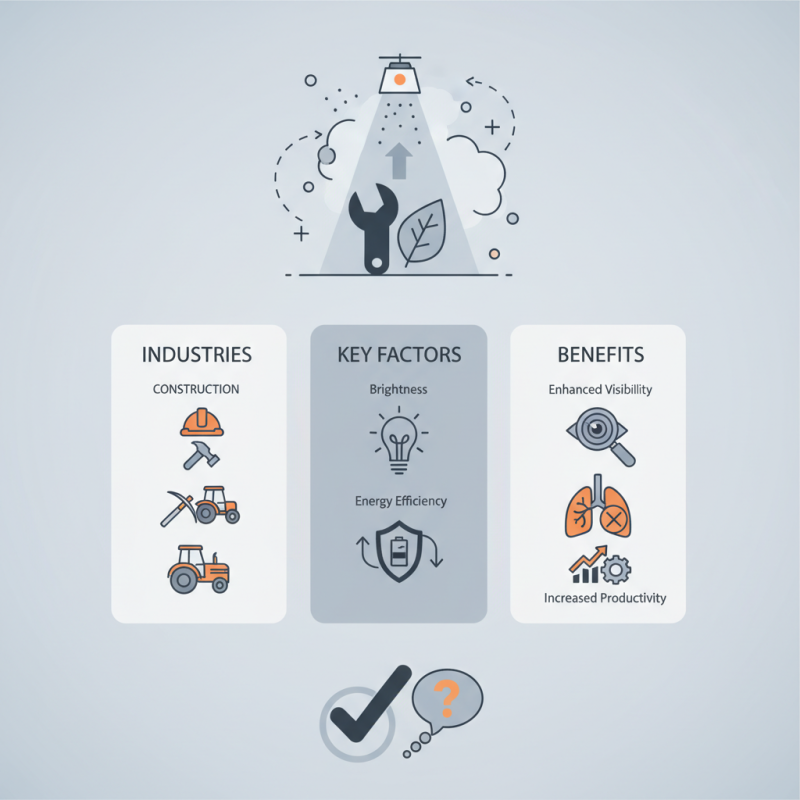
Choosing the right Dust Control Light can significantly enhance your work environment. This essential tool is vital for industries exposed to dust, such as construction, mining, and agriculture. The right light not only improves visibility but also minimizes health risks associated with dust exposure.
In an age where safety and productivity go hand in hand, selecting an appropriate Dust Control Light is crucial. It is important to consider factors like brightness, energy efficiency, and durability. Many options exist in the market, but not all are created equal. Poor choices can lead to inadequate dust suppression and reduced operational efficiency.
Reflect on your specific needs before making a decision. Consider the environment and the extent of dust exposure. Investing time in research will pay off in ensuring a safe workspace. Remember, the right Dust Control Light doesn’t just illuminate; it safeguards your health and boosts productivity.
Understanding Dust Control Lights: Key Features and Benefits
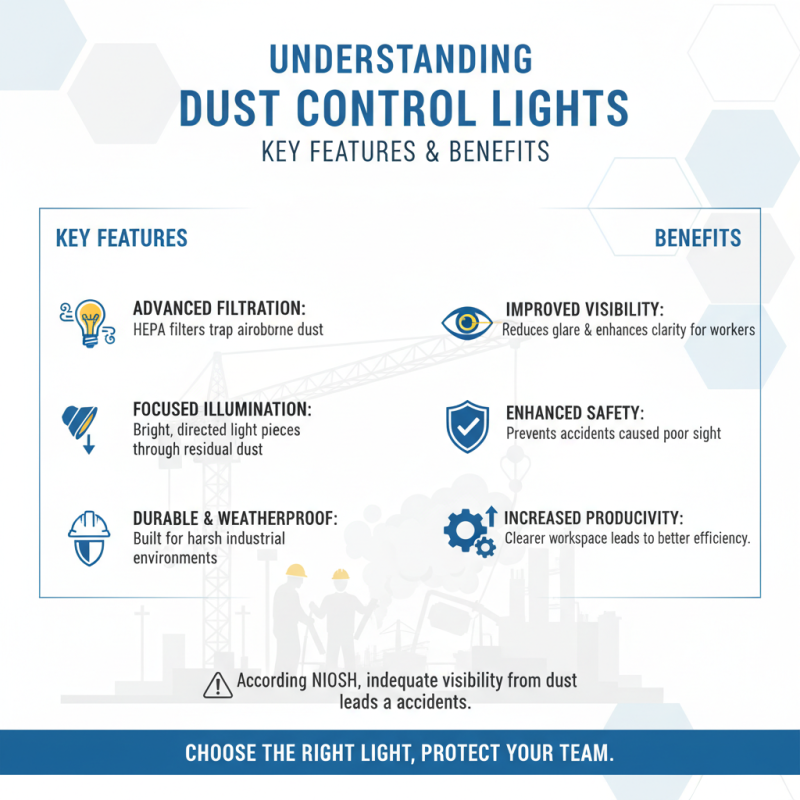
Dust control lights play a crucial role in maintaining visibility and safety in construction and industrial sites. These lights are designed to reduce airborne dust while illuminating the work area. According to a report from the National Institute for Occupational Safety and Health, inadequate visibility from dust can lead to multiple accidents. Therefore, choosing the right dust control light is significant for protecting workers.
Key features to consider include lumen output, durability, and adjustable settings. Look for lights that offer at least 10,000 lumens; this brightness effectively combats dust clouds. Durable materials such as high-grade aluminum can withstand harsh environments. Adjustable settings allow users to optimize light intensity based on specific site conditions.
Tips for selecting dust control lights: Always consider battery life too. A light that lasts for 10 hours is more efficient for extended operations. Also, prioritize ease of transport; lightweight models save time and effort. Often, users overlook the significance of dust filtration features; investing in lights that integrate this can enhance performance. It is crucial to reflect on personal or team experiences to truly understand the requirements for specific job sites.
Evaluating Different Types of Dust Control Lights for Your Application
When selecting a dust control light, consider the different types available. Each type serves specific environments and applications. LED lights are popular due to their efficiency and longevity. They provide bright illumination, essential for ensuring visibility in dusty areas. However, they can be prone to overheating in extreme conditions.
Halogen lights offer a warmer glow and are effective in cold environments. Their brightness can cut through heavy dust, but they consume more energy. Furthermore, they have a shorter lifespan compared to LEDs. Fluorescent lights, while less energy-efficient, can be suitable for indoor applications. They disperse light evenly but may not withstand rugged conditions well.
Reflect on your specific needs before making a decision. Think about the environment where the light will be used. Consider factors like dust density and ambient conditions. Each type of light has its limitations. Choosing the right one involves understanding these factors and how they align with your requirements. Balance efficiency and performance to find a suitable solution.
Determining the Optimal Brightness and Coverage for Dust Control
When selecting a dust control light, optimal brightness and coverage are crucial. Recent studies show that adequate brightness significantly reduces dust-related incidents. Lights should provide at least 5,000 lumens for effective visibility. This level ensures that even in low-light conditions, dust particles remain detectable.
Coverage area is equally important. A typical construction site might require a light that covers at least 50 feet in diameter. This ensures no blind spots, which can lead to accidents. Factors such as the height of the light and layout of the site also impact coverage. Lights positioned too high may not effectively illuminate the ground.
User feedback often highlights challenges with uneven illumination. Some lights can create shadows, which might hide dust and debris. This is a concern often overlooked in product descriptions. Users should consider testing lights in their specific environment before making a decision. Documentation from industry sources supports this approach. Analyzing real-world performance helps in making informed choices.
How to Choose the Best Dust Control Light for Your Needs?
| Feature |
Description |
Recommendation |
| Brightness |
Measured in lumens; higher lumens indicate brighter light. |
Ideal range: 5000 - 10000 lumens for effective dust control. |
| Coverage Area |
Square footage that the light can illuminate effectively. |
Consider lights that cover 1000 - 3000 sq ft. |
| Energy Efficiency |
Wattage consumption and energy-saving features. |
Look for LEDs with low wattage but high output. |
| Durability |
Ability to withstand harsh conditions and impacts. |
Choose weatherproof and rugged designs. |
| Adjustability |
Features such as tilt and swivel options for targeted illumination. |
Select models with flexible mounting options. |
Key Industry Standards and Regulations for Dust Control Lighting
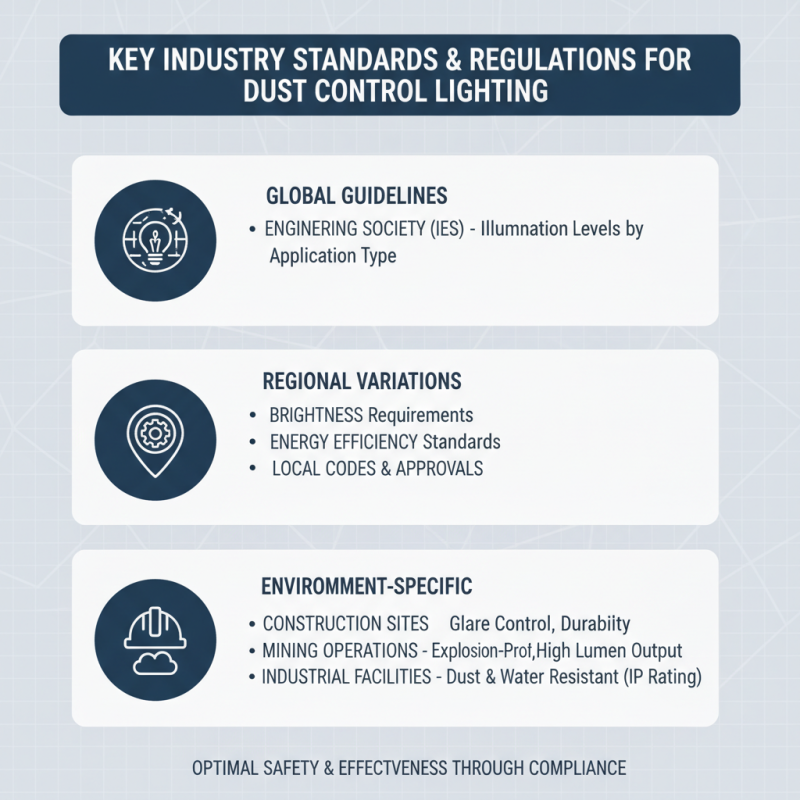
When selecting dust control lighting, understanding industry standards is crucial. Regulations vary by region, impacting the required brightness and energy efficiency. For instance, the Illuminating Engineering Society (IES) provides guidelines on illumination levels based on application types. Different environments, such as construction sites or mining operations, require tailored lighting solutions for optimal safety and effectiveness.
Compliance with standards like OSHA ensures worker safety. These regulations cover exposure limits, proper equipment maintenance, and operational practices. Adapting lighting systems to meet these regulations can be daunting. Many organizations struggle with the fine print, sometimes underestimating the nuances of these requirements. Regularly reviewing these standards helps maintain compliance and enhances operational safety.
Choosing the right dust control light requires balancing various considerations. While brightness and energy use are vital, operational costs matter too. Some facilities might overlook long-term savings from energy-efficient options. Inadequate planning could lead to higher costs and safety risks. It’s essential to reflect on these aspects regularly and adjust strategies accordingly.
Comparing Costs and Energy Efficiency of Dust Control Lighting Options
When selecting dust control lights, comparing costs and energy efficiency is crucial. Different options deliver varying performance levels.
Energy-efficient lighting reduces electricity bills. Many modern lights utilize LED technology. These options last longer and use less energy than traditional bulbs.
Initial costs differ among lighting types. While LEDs might cost more upfront, their longevity and efficiency offer savings over time. High-pressure sodium lights have lower initial costs but consume more energy and require more frequent replacements. The impact on both budget and the environment should be considered carefully.
It’s essential to evaluate your specific needs. Think about the area size and the dust level. Certain lights may not provide adequate coverage. You might end up spending extra on additional fixtures. Also, consider the installation process. Some lights are easy to install, while others require professional help. Balancing cost and efficiency can prevent future headaches.

 +86 18968869621
 CONTACT NUMBER