How to Choose the Best Strip Light for Your Space?
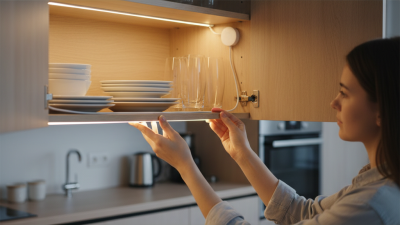
Choosing the right Strip Light can transform your space dramatically. The variety of options available can be overwhelming. It's important to consider where and how you will use these lights.
Different Strip Lights offer unique benefits. Some are great for task lighting, while others provide ambient illumination. Pay attention to brightness and color temperature. These factors can affect the mood of your room.
Budget is also a key concern. Higher-priced Strip Lights often come with better features. However, many affordable options still deliver great quality. Take your time to reflect on your needs. A good choice enhances your environment, while a poor one can lead to disappointment.
Understanding Different Types of Strip Lights and Their Uses
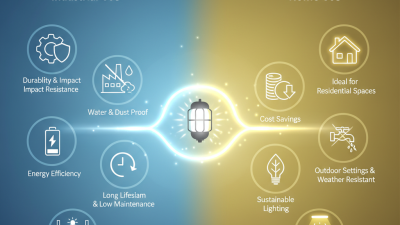
When choosing strip lights, understanding the different types is crucial. There are mainly LED strip lights, neon flex lights, and RGB lights. LED strip lights are energy-efficient and versatile. According to a report by the Department of Energy, LED lighting can save up to 75% on energy costs compared to traditional lighting.
Neon flex lights offer a unique, retro aesthetic. They are often used in signage and decorative applications. However, their installation can be complex. A study revealed that improper installations lead to a 20% increase in operational failures. These failures can be costly in the long run.
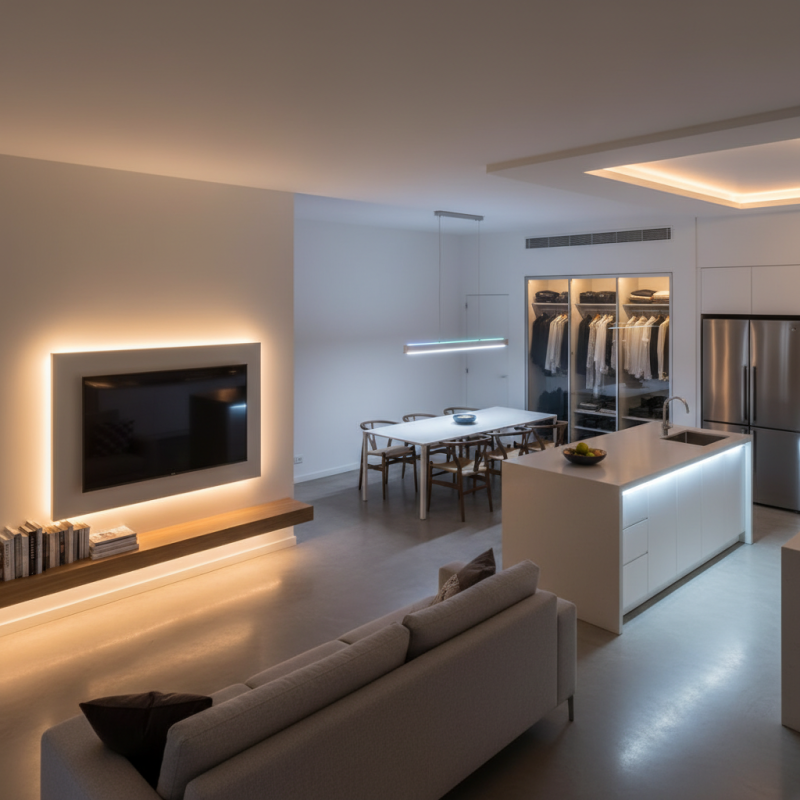
RGB strip lights are popular for their ability to change colors. They add a dynamic feel to any space. However, users should be aware that fading can occur over time. This can make maintaining a vibrant look challenging. Understanding the various uses and characteristics of strip lights allows for better decisions in lighting design. Adaptability in spaces like kitchens or living rooms can greatly influence ambiance and utility.
How to Choose the Best Strip Light for Your Space?
Evaluating Brightness and Color Temperature for Your Needs
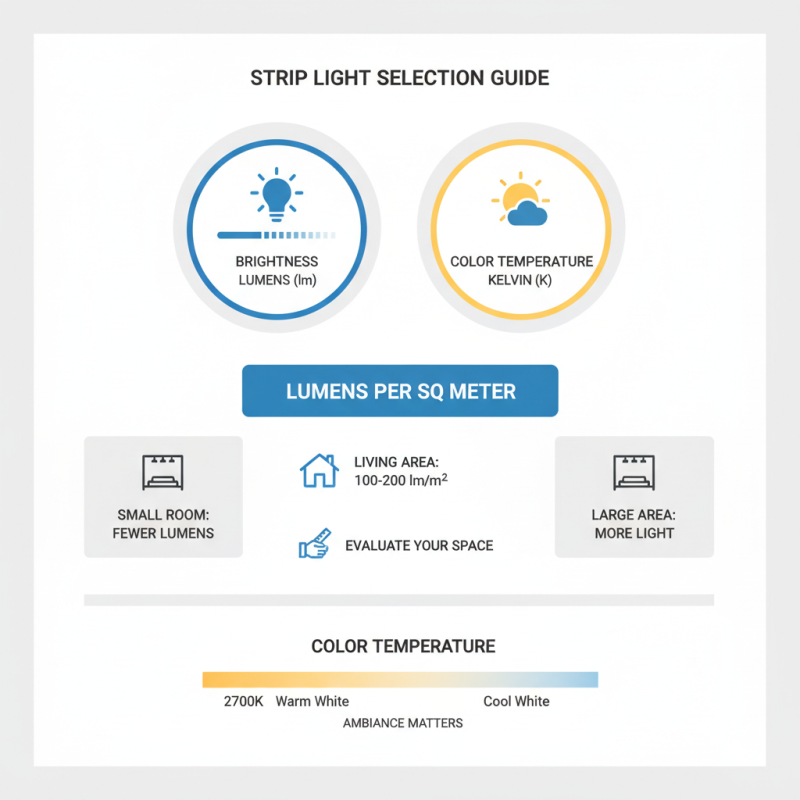
When selecting strip lights, brightness and color temperature are vital aspects. Brightness is measured in lumens. The Illuminating Engineering Society states that a standard living area requires around 100-200 lumens per square meter. This means you need to evaluate your space carefully. If it’s a small room, fewer lumens may suffice. Larger areas will demand more lighting for adequate visibility.
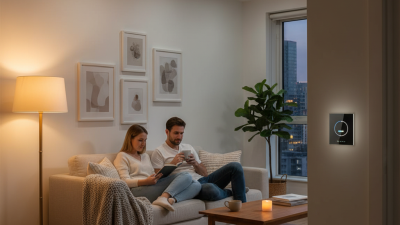
Color temperature plays an equally important role. It is measured in Kelvins (K). For a warm ambiance, choose lights around 2700K to 3000K. This creates a cozy atmosphere. Cooler temperatures, from 4000K to 5000K, mimic daylight but can feel harsh. Research shows that cooler lighting may enhance alertness, suitable for workspaces. In contrast, warmer tones can promote relaxation, ideal for bedrooms.
Reflect on how different colors affect your mood. Not all spaces benefit from bright, cool lights; sometimes, softer hues are preferred. Consider the activities that will take place in the room. Experimenting with various color temperatures may not always yield the desired vibe. You might have to adjust and fine-tune to get it right. Finding the perfect balance can be a trial-and-error process.
Considering the Length and Size of Strip Lights for Your Space
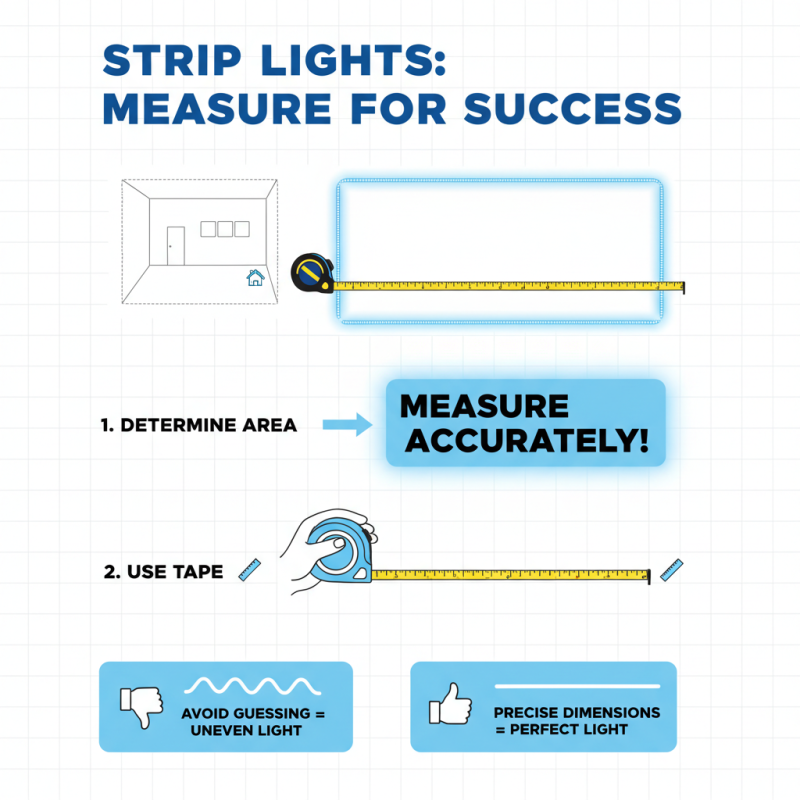
When considering the length and size of strip lights for your space, it's essential to measure accurately. Determine the area where you plan to install the lights. Avoid guessing, as miscalculations can lead to uneven lighting. Use a measuring tape to get precise dimensions.
Tip: Plan your layout before buying strip lights. Visualize the light's path and how it complements your room's design. Think about curves, corners, and any furniture that may block the light. Sometimes, a shorter strip can create a more elegant look than a long installation.
Consider the flexibility of the strip lights. Most models can be cut to fit your desired length. However, remember that cutting is irreversible. Ensure you’re confident in your measurements. You might find that an oversized strip can overwhelm small spaces, while too little can feel dim.
Tip: Use a paper template to mark where the lights will go. This can help you avoid potential misalignment or overcrowding. A little planning goes a long way. Don't overlook how the light distribution influences the mood of your space. Brightness can vary greatly with length and positioning.
Exploring Energy Efficiency and Power Source Options
When selecting strip lights for your space, consider energy efficiency and power source options carefully.
LED strip lights often stand out due to their lower energy consumption. According to the U.S. Department of Energy, LED lighting uses at least 75% less energy than traditional incandescent bulbs. This makes them an excellent choice for long-term savings. However, some users find the upfront cost of LEDs to be a hurdle.
Power source options also play a significant role. Strip lights come in various power supply configurations, such as battery-operated or hardwired.
Battery-operated lights offer flexibility, but may require frequent battery changes. This can add to maintenance concerns.
Hardwired options generally provide more powerful and consistent lighting. The choice depends on the specific application and installation environment.
While energy efficiency is essential, it’s important to design the lighting setup thoughtfully. Poor placement can lead to uneven lighting and dark spots. Some users overlook how the color temperature of the strips can impact the ambiance.
Cooler whites can feel stark, while warmer tones create a cozy feel. It’s vital to assess both function and aesthetics when making a decision.
Assessing Installation Methods and Flexibility of Strip Lights
When choosing strip lights, installation methods play a crucial role. Understanding how strip lights can be mounted ensures a seamless fit in any space. Many options exist, from adhesive backing to clip systems. A recent industry report indicated that 45% of users prefer adhesive strips for their ease of use. However, this method may not always provide optimal adhesion on textured surfaces. Alternatives, like clips, offer more versatility, especially in commercial settings.
Flexibility is another essential factor. Strip lights are available in various lengths and can be cut to size, which enhances their adaptability to different environments. This flexibility is important for achieving the desired lighting effect. According to a study, 30% of users experienced challenges in achieving even lighting when using improperly sized strips. It’s important to measure spaces accurately and consider potential installation obstacles. Sometimes, what seems like a straightforward installation can turn complex. Always evaluate the layout and functionality before making a choice.
How to Choose the Best Strip Light for Your Space?
| Feature |
Option 1 |
Option 2 |
Option 3 |
| Installation Method |
Adhesive Tape |
Mounting Clips |
Channel Housing |
| Flexibility |
Highly Flexible |
Moderately Flexible |
Rigid |
| Length Options |
5 meters |
10 meters |
15 meters |
| Color Temperature |
Warm White (3000K) |
Cool White (4000K) |
Daylight (6000K) |
| Dimmable |
Yes |
No |
Yes |

 +86 18968869621
 CONTACT NUMBER